
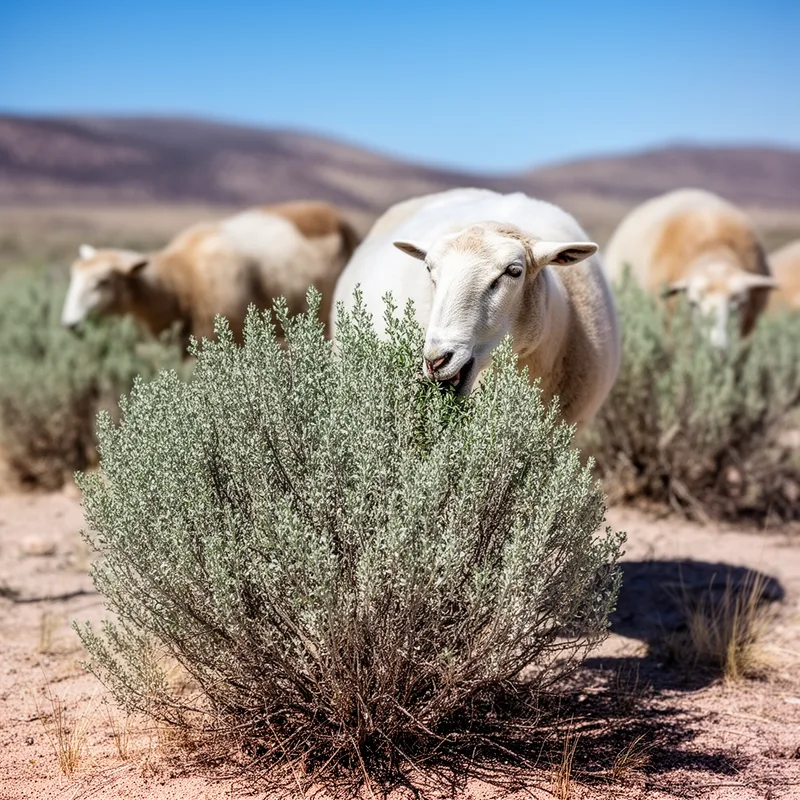
bud sagebrush
- noun
- /bʌd ˈseɪdʒˌbrʌʃ/
- US
- Bud sagebrush provides essential forage for sheep in the western United States.
Examples
-
The sheep grazed among the bud sagebrush in the open rangeland.
-
The bud sagebrush grows well in arid conditions.
-
Bud sagebrush is an important plant for sustaining livestock during dry months.
-
Scientists are studying how bud sagebrush adapts to arid environments.
-
Farmers often plant bud sagebrushes for their livestock.
-
During summer, sheep rely on bud sagebrush for sustenance in dry areas.
-
Many farmers cultivate bud sagebrush to ensure their sheep have enough food.
Synonyms

A bush from the western United States that lives many years and that sheep eat, called budsage
A useful pasture plant that sheep eat
Surface Forms
Morphology
This is a straightforward noun–noun compound in which 'bud' modifies 'sagebrush', so a learner who knows 'bud' (a plant swelling) and 'sagebrush' (a shrub) can readily infer it denotes a type/variety of sagebrush. While finer details like its use as sheep forage are not directly derivable, the basic meaning 'a kind of shrub' is transparently built from the constituents.
Etymology
Bud sagebrush likely comes from the plant's look: it is a kind of sagebrush that has many small, round buds on its branches. Because sheep and other animals eat its leaves and buds, the name now refers to a shrub used as 'forage'.

