

Artemisia spinescens
- noun
- Specialized
- Ranchers often rely on Artemisia spinescens as an important early spring food source for their sheep.
Examples
-
The resilience of Artemisia spinescens makes it a valuable plant for revegetation projects in the western United States.
-
Ecologists study Artemisia spinescens to understand its role in supporting native wildlife in arid regions.
-
The Artemisia spinescens thrives in arid conditions.
-
Farmers often cultivate Artemisia spinescens for livestock.
-
Ranchers often rely on Artemisia spinescens as an important early spring food source for their sheep.
-
Ecologists study Artemisia spinescens to understand its role in supporting native wildlife in arid regions.
-
Farmers often cultivate Artemisia spinescens to provide forage for livestock.
Synonyms
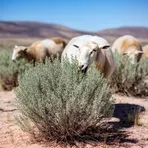
A shrub that grows in the western United States that sheep eat
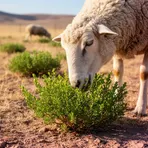
A useful pasture plant that sheep eat
Surface Forms
Morphology
Artemisia + spinescens
This is a Latin binomial taxonomic name (genus + species epithet). 'Artemisia' indicates a plant genus, but 'spinescens' is not a standard English word (not found in the dictionary) and the combination functions as a technical label rather than a compositional phrase, so a B1 learner who knows the parts would not reliably infer the species meaning.
Etymology
Artemisia spinescens may come from the Greek goddess Artemis and the Latin word spinescens, meaning 'spiny', so imagine a small, prickly shrub. Because this tough, spiky plant gives early green shoots, ranchers call it 'budsage' and use it today as a hardy food plant for sheep.

