
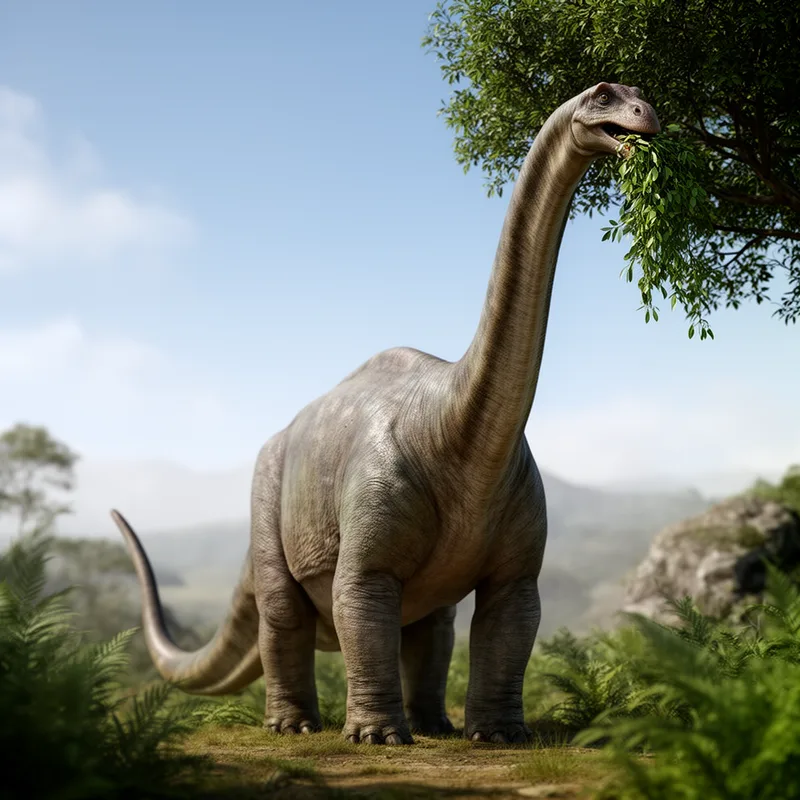
brontosaur


 1
8.9
1
8.9
- noun
- /ˈbrɒntəˌsɔːr/
- US
- 43 Freeze fires his gun, freezing the legs of the mighty Brontosaur.
Examples
-
It's okay to call them brontosaurs, Tim.
Fiction book (1993) -
The page is open to the brontosaur.
Fiction book (1997) -
Despite what the books say, brontosaurs avoid swamps.
Fiction book (1990) -
Commonly called "brontosaurs."
Fiction book (1990) -
I consider the concept of "post-scarcity society" to be about as plausible as "TARDIS full of spellcasting vampire brontosaurs."
Blog text (28) -
A group of children marveled at the enormous size of the brontosaur displayed in the museum.
-
In Jurassic Park, the fictionalized brontosaur roamed the lush landscapes alongside other dinosaurs.
-
Paleontologists believe that the brontosaur fed primarily on vegetation found in the dense forests of the Jurassic period.
Synonyms
 1
9.9
1
9.9
A very large plant-eating dinosaur with a small head and a very long neck and tail
 1
8.9
1
8.9
A very large plant-eating dinosaur with a long neck that walked on four legs
 1
7.2
1
7.2
A huge four-legged plant-eating dinosaur that lived in North America in the late Jurassic
 1
9.9
1
9.9
A very large plant-eating dinosaur with a long neck that lived in North America
 1
8.7
1
8.7
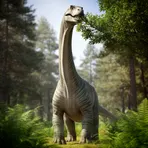
A large, long-necked plant-eating dinosaur from the Jurassic with longer front legs than back legs
 1
9.9
1
9.9
A large long-necked plant-eating dinosaur from the Jurassic with a box-shaped skull

A large plant-eating dinosaur with a long neck and tail

A large dinosaur that eats plants with a very long neck and tail
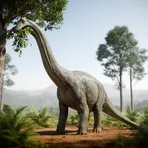
A very large plant-eating dinosaur with a small head, long neck and long tail

A group of very large plant-eating dinosaurs with long necks, long tails and four thick legs
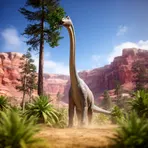
A very large dinosaur that ate plants from the Late Jurassic, known from fossils in western North America

A very large dinosaur with a long neck, as tall as a five-story building
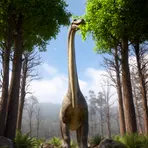
A very large plant-eating dinosaur with a very long neck that reaches leaves high in trees
How Big

Surface Forms
Morphology
brontosaur = brontosaurus (semi-transparent) = bronto + saur
The relation of 'brontosaur' to 'brontosaurus' is a straightforward shortening (clipping), so the base form is easily recoverable.
Etymology
The word brontosaur comes from Greek parts bronte 'thunder' and sauros 'lizard', so it literally means 'thunder lizard'. That's why brontosaur names a very large, four-legged plant-eating dinosaur with a long neck and tail.