
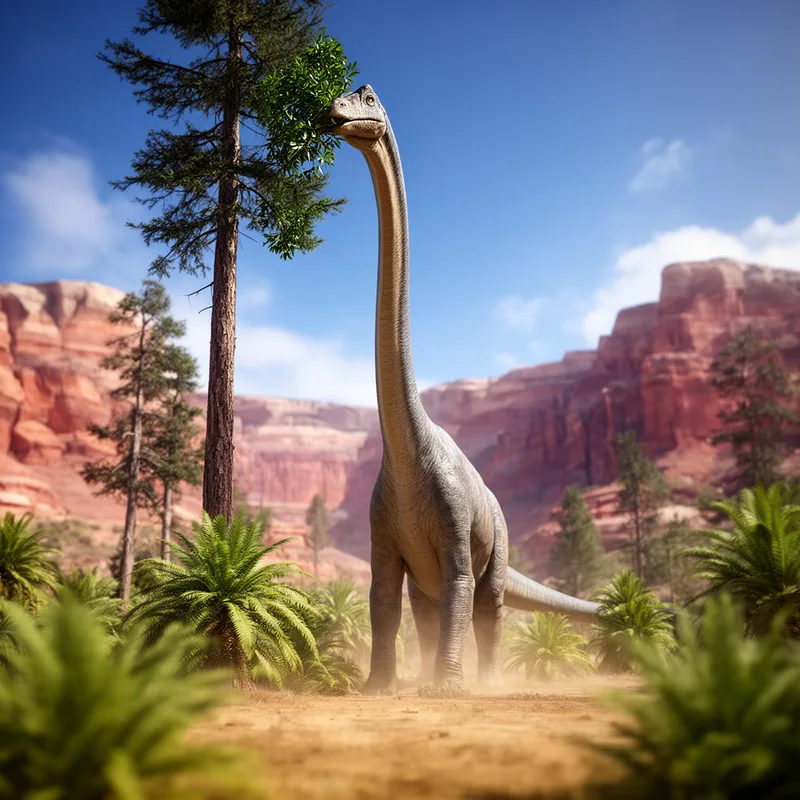
Seismosaurus
- noun
- /ˌsaɪzməˈsɔrəs/
- Specialized
- The Seismosaurus roamed the earth during the Late Jurassic period, feasting on plants.
Examples
-
Fossils of the Seismosaurus have been discovered in western North America, revealing its massive size.
-
Seismosaurus might have weighed a hundred tons!
Fiction book (1990) -
Paleontologists believe the Seismosaurus was one of the largest herbivorous dinosaurs of its time.
Synonyms
A very large plant-eating dinosaur with a small head, long neck and long tail
Surface Forms
Morphology
Seismosaurus = seism + saurus (semi-transparent) = seismo + saurus
The name combines the scientific elements 'seism-' (earthquake) and '-saurus' (lizard) so the literal sense 'earthquake lizard' is derivable to those familiar with these combining forms but not to average learners.
Etymology
Seismosaurus comes from Greek parts meaning 'earthquake' and 'lizard', like the English word seismic and the root saurus for 'lizard'. It literally means an 'earth-shaking lizard', a helpful picture because this herbivore was very large and could seem to make the ground tremble.

