

blue-green algae


 1
4.1
1
4.1
- noun
- /bluː-ɡriːn ˈælɡi/
- Specialized
- The presence of blue-green algae in the water indicates a rich supply of nutrients, which can be beneficial for aquatic life.
- blue-green algae and bacteria
Examples
-
Blue-green algae in these meres form bundles and coils of colonies, becoming a mat of green virtually overnight and completely obscuring the water's surface.
Academic text (2003) -
Bacteria and blue-green algae are the most primitive organisms known, with a genesis that dates back to more than 3 billion years ago.
Academic text (1994) -
Among other things, they determined that by year 4, blue-green algae are dominant and continue to increase through year 15.
Academic text (2003) -
Soulseat Loch, local farmers maintain, has a history of annual blooms of blue-green algae.
Academic text (2003) -
"A lot of those fish had an off flavor because they were getting into blue-green algae growing on the side of the canals," Fitzsimmons recalls.
Academic text (2000) -
But scientists who have studied the loch's water, like Geoffrey Codd of Scotland's University of Dundee, believe there's another explanation for its green color: a bloom of blue-green algae.
Academic text (2003) -
Because higher levels of blue-green algae correlate with higher levels of off-flavors, Zimba and the other researchers say that older ponds may be used for holding sac fry and fingerlings.
Academic text (2003) -
Researchers are studying the impact of climate change on the growth patterns of blue-green algae in freshwater lakes.
-
High levels of blue-green algae can produce toxins that are harmful to both humans and animals if ingested.
Synonyms
 3
7.5
3
7.5
Bacteria that make food from sunlight and give oxygen, often blue-green and found in water

Microscopic blue-green bacteria that live in water and make food using sunlight

A group of simple water organisms like blue-green algae that make food from sunlight and produce oxygen

A group of bacteria like blue-green algae that make food from sunlight and live in water and soil

An old name for blue-green algae now called cyanobacteria

An old name for blue-green bacteria also called cyanobacteria
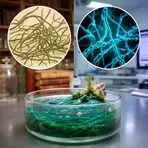
An old scientific name for blue-green algae now called cyanobacteria
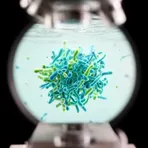
A group of simple living things now called blue-green algae
Surface Forms
Morphology
blue-green + algae
The phrase literally combines a color descriptor ('blue-green') with 'algae,' so its meaning — algae that are blue-green in color (i.e., cyanobacteria) — is directly derivable from the constituents. Color-adjective + noun compounds are cross-linguistically common and follow standard compositional patterns, so a B1 learner who knows the constituent words would understand this term.
Etymology
The name blue-green algae is made of two parts: blue-green describes their blue and green colours and algae are plant-like life that grow in water. These tiny organisms often form green or blue-green slimy layers on ponds and lakes, so the name came to mean those water organisms also called 'cyanobacteria'.