

Cyanophyceae
- noun
- /ˌsaɪənəˈfaɪsiˌi/
- Archaic
- Under the microscope, researchers identified Cyanophyceae based on their bluish pigment.
Examples
-
The bloom was caused mainly by Cyanophyceae populations in the lake.
-
Cyanophyceae play an important role in nitrogen fixation in aquatic ecosystems.
-
The Cyanophyceae are crucial for aquatic ecosystems.
-
Many species of Cyanophyceae can thrive in extreme conditions.
-
Cyanophyceae are essential for maintaining the balance of nutrients in freshwater lakes.
-
The presence of Cyanophyceae indicates a healthy, photosynthetic community in the water.
-
Researchers found that Cyanophyceae contribute significantly to oxygen production in aquatic habitats.
Synonyms

 3
7.5
3
7.5

Bacteria that make food from sunlight and give oxygen, often blue-green and found in water


 1
4.1
1
4.1
Tiny living things in water that make food from light and often look blue-green

An old name for blue-green bacteria also called cyanobacteria
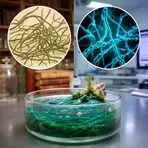
An old scientific name for blue-green algae now called cyanobacteria

An old name for blue-green algae now called cyanobacteria

A group of simple living things now called blue-green algae

An old scientific name for blue-green algae now called cyanobacteria

A group of bacteria like blue-green algae that make food from sunlight and live in water and soil

A group of simple water organisms like blue-green algae that make food from sunlight and produce oxygen
Surface Forms
Morphology
Etymology
The word Cyanophyceae comes from Greek parts cyano- meaning 'blue' and -phyceae meaning 'algae' or 'seaweed'. So the name literally means 'blue algae', which fits the blue-green bacteria you often find in water.