
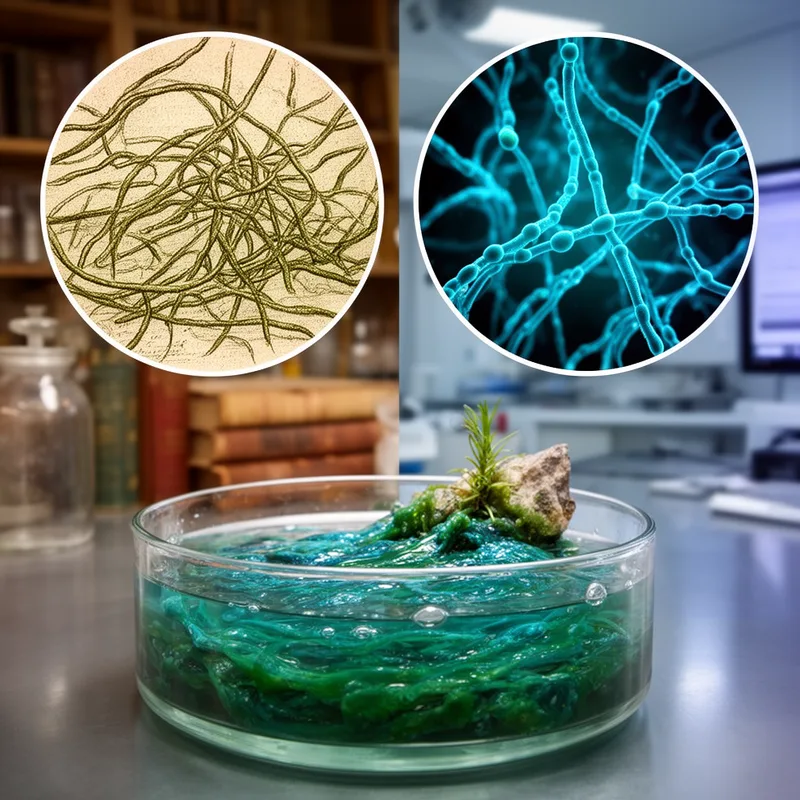
Myxophyceae
- noun
- /mɪksoʊˈfaɪsiˌi/
- Archaic
- The classification of Myxophyceae has been largely replaced by the modern term cyanobacteria.
Examples
-
Early botanists grouped blue-green algae under the class Myxophyceae.
-
The characteristics attributed to Myxophyceae included their pigment content and slimy appearance.
-
The classification of Myxophyceae has changed over the years.
-
Scientists now refer to Myxophyceae as cyanobacteria.
-
Early botanists grouped blue-green algae under the class Myxophyceae.
-
The characteristics attributed to Myxophyceae included their pigment content and slimy appearance.
-
Scientists now refer to Myxophyceae as cyanobacteria.
Synonyms

 3
7.5
3
7.5

Bacteria that make food from sunlight and give oxygen, often blue-green and found in water


 1
4.1
1
4.1
Tiny living things in water that make food from light and often look blue-green

Microscopic blue-green bacteria that live in water and make food using sunlight

A group of bacteria like blue-green algae that make food from sunlight and live in water and soil
A group of simple water organisms like blue-green algae that make food from sunlight and produce oxygen
An old name for blue-green algae now called cyanobacteria
A group of simple living things now called blue-green algae

An old scientific name for blue-green algae now called cyanobacteria

An old name for blue-green bacteria also called cyanobacteria
Surface Forms
Morphology
Myxophyceae = myxo + phyceae
A technical taxonomic formation from Greek combining forms (myxo- + -phyceae); its meaning is specialized and not transparently inferable by an average B1 learner from the parts.
Etymology
Myxophyceae comes from Greek parts myxo- meaning 'slime' and phyceae meaning 'seaweed' or 'algae', so it literally means 'slimy algae'. That's why the name was used for blue-green algae with a slimy look, though today scientists usually call them cyanobacteria.