

to blow out
 50
2.4
50
2.4

- phrasal verb
- /bloʊ aʊt/
- Make a wish before you blow out the candles on your birthday cake.
- blow out the candles
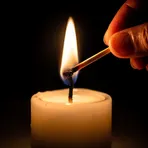
- blow out the match
- blow out the flame
Loading YouTube…
Watch on YouTubeI was asked just now by Doubly Magazine to blow out the candles.
- I was asked just now by Doubly Magazine to blow out the candles.
- All right, now go blow out all those candles and make that wish come true.
- And I hear that whatever it was, and I like, scream, and I blow out the fire as fast as I can.
- Igor. Igor, how sweet of you to remember my birthday. Listen, let me blow out the candles, make a wish, and then we'll have a party later.
- But here's when it gets weird, where when they're done, when they're done singing, they have me blow out on the candle.
Examples
-
I was asked just now by Doubly Magazine to blow out the candles.
-
And then, um, open your eyes and blow out the candles and that'll break the circle.
-
How about instead, we burn a match, and blow it out together?
-
Did you blow out the candles for them?
-
Come on, honey, blow out your candles.
-
Okay, now blow out your candles.
-
It's time to blow out the candles and make a wish.
-
Okay, blow out the candles, Blue.
-
WOMAN: Let's get ready to blow out the candles, baby!
-
The teacher then asked Amir to blow out the candles, which he did after strenuous effort.
Academic text (1991)
Synonyms
 114
2.0
114
2.0
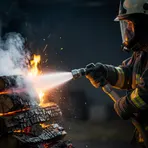
Make a fire, light, or cigarette stop burning
 31
5.7
31
5.7
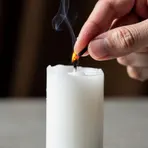
To put out a small flame by covering or pinching it
 23
4.4
23
4.4
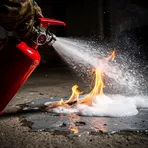
Stop a fire, candle, or other light from burning

 16
4.2
16
4.2
To stop thirst by drinking or to put out a fire by cooling it
 11
5.3
11
5.3
To stop a small fire by covering it so it has no air
 6
4.7
6
4.7
Stop a flame, candle, or small fire from burning
 5
2.5
5
2.5
Stop a fire burning and spreading
 3
5.3
3
5.3
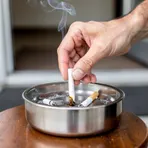
To press the burning end of a cigarette against a surface to put it out
 1
4.0
1
4.0
To press a small burning thing so it stops burning, for example a cigarette

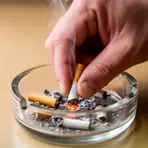
To stop something burning by crushing it
Antonyms

How Effective

Surface Forms
Morphology
The sense 'to erupt forcefully' is directly derivable from 'blow' (to expel or move with force) combined with 'out' (outward/completely), so the image of something bursting or being expelled outward is compositional. This motion/force + particle pattern is common in English (e.g. 'blew out a tyre', 'blew out a candle') and is likely recoverable by a B1 learner who knows both constituents.
Etymology
Blow out comes from the simple act of blowing air to stop a flame: you lean over and blow the candles out, and the fire goes out. That's why the phrase means 'to extinguish' a light or flame.