

blasting
 28
3.5
28
3.5

- noun
- /ˈblæstɪŋ/
- Specialized
- During the project, blasting was needed to remove the large boulders lying in the path.
- abrasive blasting
Loading YouTube…
Watch on YouTubeAnd the blasting caps are extremely sensitive.
- And the blasting caps are extremely sensitive.
Examples
-
The construction crew was busy with blasting to clear the rock for the new highway.
-
Do you know if anybody's doing any drilling or blasting or anything like that?
-
Do you know if anybody is doing any blasting or drilling or anything like that?
Fiction book (1990) -
How many days, weeks, even months might this blasting and drilling go on?
Fiction book (1993) -
And the blasting caps are extremely sensitive.
-
After the first blasting on Halmarin-IV, they banned all explosives from those planets.
Fiction book (1991) -
Application requires scarification of the substrate by brush blasting followed by a thorough cleaning.
Academic text (1998) -
According to Seebode, all of the blasting adheres to or exceeds the guidelines laid down by state and local authorities.
Academic text (2003) -
Soon, daily blastings of dynamite would shatter the last remnants of peacefulness at the hermitage.
Fiction book (1993) -
Interior removal operations began with abrasive blasting of all weld seams to identify deficiencies such as skips and spatter.
Academic text (2000)
Synonyms
 ∞
2.8
∞
2.8
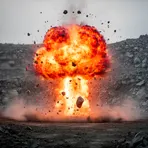
A sudden violent burst that makes a loud noise and causes damage
 85
6.7
85
6.7
A sudden violent explosion from a chemical or nuclear reaction
 72
4.2
72
4.2
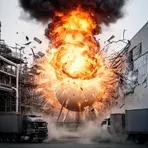
The act of destroying a building or other structure on purpose
 31
4.4
31
4.4
The act of tearing down a building to destroy it
 1
6.0
1
6.0
A sudden violent explosion that destroys things nearby
Compounds
- Specialized

 1
8.6
1
8.6
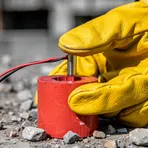
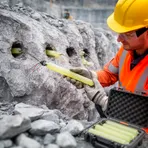
An explosive made from chemicals used to break rock in mines and to destroy buildings
How Powerful

Surface Forms
Morphology
Etymology
Blasting comes from the word blast, originally meaning a strong 'blow' or sudden burst and then an 'explosion', so people used it for the work of breaking rock with explosives. So 'blasting' is the act of making controlled explosions to break earth or stone.