
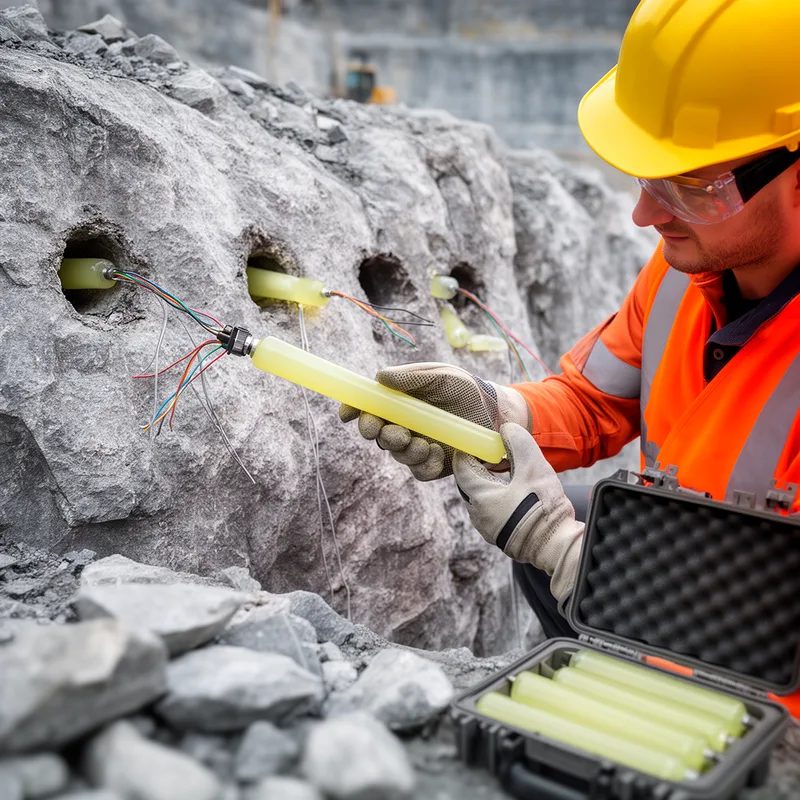
blasting gelatin


 1
8.6
1
8.6
- noun
- /ˈblæstɪŋ ˈdʒɛtəˌlɪn/
- Specialized
- If we were to fill those cylinders with that blasting gelatin and then fix them so that they would stick out over the end of the boat, and then run the boat against the side of a ship, they would go off, just like a torpedo, wouldn't they?
Examples
-
Blasting gelatin, tinned grub, cylinders of oxygen and hydrogen, heaps of things them Germans could use.
-
Well, them, that's blasting gelatin, miss.
-
All it would take would be one bullet in the blasting gelatin and we'd be in little bits and pieces.
-
The demolitions committee of Project Mayhem... wrapped the foundation columns of a dozen buildings with blasting gelatin.
-
The construction crew used blasting gelatin to safely demolish the old building.
-
To clear the tunnel, they employed blasting gelatin as an effective explosive.
-
During the mining operation, workers carefully handled blasting gelatin for maximum safety.
Synonyms
 138
5.1
138
5.1
An explosive material used to break rock or destroy buildings
 1
9.9
1
9.9
A strong explosive like dynamite used to break rock or buildings
 1
9.9
1
9.9
An explosive like dynamite used to break rock in mines or construction
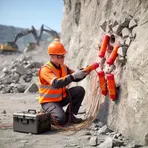
A trade name for an explosive used to break rock in mining and construction

A strong chemical charge in shells or bombs that makes a violent blast
Surface Forms
Morphology
blasting + gelatin
The compound links 'blasting' (use of explosives) with 'gelatin' (a jelly-like substance), so a learner who knows both words can reasonably infer it is a gelatinous material used for blasting — i.e. an explosive. However, the precise technical sense (a specific nitroglycerin/guncotton explosive) and the specialized use of 'gelatin' for explosives are not fully predictable from the common food-related meaning, so the relation is only partly transparent.
Etymology
Blasting gelatin is named because blasting shows it makes things 'explode' and gelatin shows it is jelly-like. Miners would pack the jelly into holes in rock and set it off to break the rock, so the name now means a powerful explosive used to break rock.