

biograph
- noun
- /ˈbaɪəˌgræf/
- Archaic
- Inventors competed to improve the biograph and make films longer and clearer.
Examples
-
Historians studied the biograph to understand the origins of modern cinema technology.
-
The biograph amazed audiences with its moving pictures at the 1896 exhibition.
-
The biograph was a revolutionary invention in cinema.
-
In the late 1800s, a biograph could captivate audiences.
-
In the early 1900s, the biograph fascinated audiences with its ability to show moving pictures of everyday life.
-
Many silent films were presented using a biograph, capturing the imagination of those who witnessed the moving images.
-
At the museum, we learned how the biograph played a crucial role in the history of cinema and entertainment.
Synonyms

 2
2.7
2
2.7

A machine that shows films on a screen for groups of people
 1
3.4
1
3.4
A machine that shows moving pictures from a roll of film on a screen


 1
9.9
1
9.9
An early machine that shows moving pictures to people
 1
9.9
1
9.9
A machine long ago used to record and show moving pictures
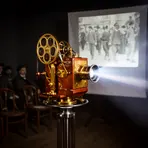
An early machine that shows moving pictures on a screen
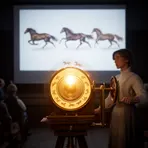
An early machine that projects pictures to show movement

A machine that shows moving pictures from film on a screen
Surface Forms
Morphology
Etymology
Biograph comes from the Greek parts bio- ('life') and -graph ('to write' or 'record'), like in the familiar word biography. That's why a biograph projector was a machine that showed a 'writing of life' — it displayed moving images of people and events.