

to barnacle
- verb
- /ˈbɑrnɪkəl/
- Divers found that the underwater pipes had completely barnacled over the winter.
Examples
-
As the years passed, the old pier became barnacled with crusty shells.
-
The boat was barnacled after sitting in the water for months.
-
The old ship had barnacled after years of sitting unused in the harbor.
-
If left in the water too long, the boat's hull will quickly barnacle and slow down.
-
The old ship had barnacled after years of sitting unused in the harbor.
-
Divers found that the underwater pipes had completely barnacled over the winter.
-
If left in the water too long, the boat's hull will quickly barnacle and slow down.
Antonyms


Compounds


- Specialized
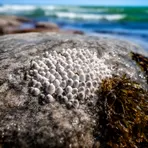
A small sea animal with a shell on a stalk that sticks to ships and driftwood

How Encrusted

Surface Forms
Etymology
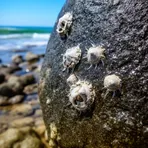
Barnacle as a verb comes straight from the noun and simply means to become covered by barnacles on a ship or pipe, since those creatures 'stick' on surfaces and form a hard crust.