

rock barnacle
- noun
- /rɑk ˈbɑrnəkl/
- The rock barnacle thrives on wave-swept shores, clinging tightly to boulders.
Examples
-
Scientists studied how rock barnacles survive exposure to air during low tide.
-
Children collected shells and noticed many rock barnacles attached to the rocks.
-
The rock barnacle clings tightly to the rocks.
-
Many rock barnacles can be found along the coast.
-
Children collected shells and noticed many rock barnacles attached to the rocks.
-
Scientists studied how rock barnacles survive exposure to air during low tide.
-
The rock barnacle thrives on wave-swept shores, clinging tightly to boulders.
Synonyms
 11
6.9
11
6.9

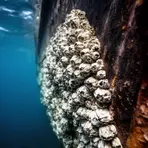
A small sea animal that sticks to rocks and the bottoms of boats and forms a hard shell
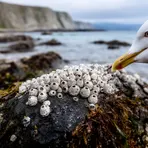
A small barnacle that sticks to rocks at low tide on northern coasts
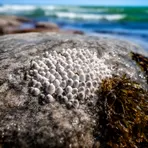
A small cone-shaped shell animal that sticks to rocks between high and low tide
Surface Forms
Morphology
The meaning 'a barnacle that attaches to rocks' is directly and transparently derivable from combining 'rock' (stone) with 'barnacle' (a sessile marine crustacean). This noun-noun compounding follows regular English composition patterns and is cross-linguistically common, so a B1 learner who knows both constituents will readily infer the MWE meaning.
Etymology
Rock barnacle is a plain, literal name: it describes a barnacle that lives on a rock and clings tightly by the sea. So the name means 'a barnacle that attaches itself to rocks', and the image of a hard shell stuck to stone makes it easy to remember.