
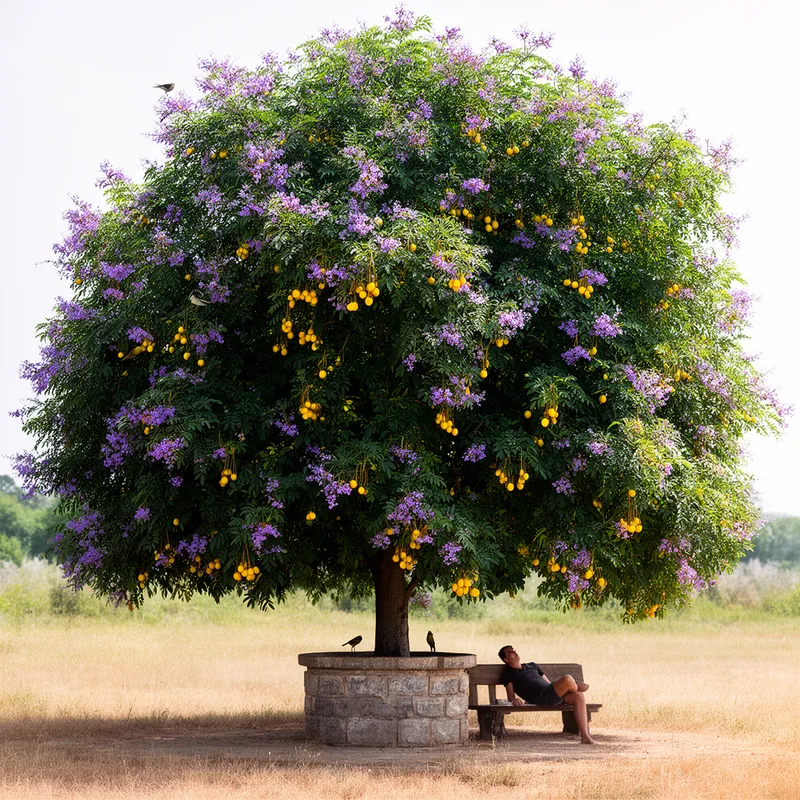
azedarach
- noun
- /ˌæzɪˈdɛræk/
- Many gardeners prefer the azedarach for its shade.
Examples
-
An azedarach was planted by the old well to provide shade during the hot summer months.
-
Birds rarely eat the fruit of the azedarach, as it is considered inedible and mildly toxic.
-
The azedarach produces clusters of purple flowers in the early spring.
-
The azedarach tree blooms beautifully in spring.
-
The azedarach tree can often be found in parks, providing shade with its broad leaves and vibrant purple blossoms.
-
In warmer climates, many homeowners choose to plant the azedarach for its beautiful flowers and attractive foliage.
-
The azedarach is commonly known as the chinaberry tree, which produces clusters of yellow fruit that are not safe to eat.
Synonyms


 1
9.6
1
9.6
A tree with small yellow berries and broad leaves that gives shade

A tree with purple flowers and small yellow fruits that are not edible, grown for shade in warm places
A tree that loses its leaves with purple flowers and small yellow fruits often grown for shade

A tree with clusters of purple flowers and small yellow fruits you cannot eat

A tree that loses its leaves and has purple flowers and small yellow fruit grown for shade
A tree with purple flowers and small yellow fruit you cannot eat, often used for shade
Compounds
- Specialized
A tree with purple flowers and small yellow fruits that are not edible, grown for shade in warm places
Surface Forms
Etymology
Azedarach probably comes from Persian words āzād 'free' and daraxt 'tree', and the name was carried into European languages to label this plant. So, you can remember azedarach as a name that originally meant 'free tree' and now refers to the purple-flowered shade tree.