

China tree
- noun
- /ˈtʃaɪnə tri/
- US
- In the spring, the China tree bursts into clusters of fragrant purple flowers.
Examples
-
Many southern gardens feature the China tree for its attractive foliage and distinctive yellow fruit.
-
The large China tree in the backyard provides excellent shade during the summer months.
-
The China tree blooms beautifully in spring.
-
Many China trees can be found in southern gardens.
-
The large China tree in the backyard provides excellent shade during the summer months.
-
In the spring, the China tree bursts into clusters of fragrant purple flowers.
-
Many southern gardens feature the China tree for its attractive foliage and distinctive yellow fruit.
Synonyms


 1
9.6
1
9.6
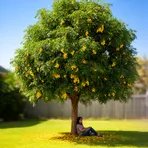
A tree with small yellow berries and broad leaves that gives shade
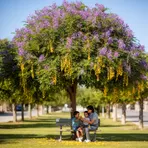
A tree with purple flowers and small yellow fruit you cannot eat, often used for shade
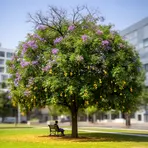
A tree that loses its leaves with purple flowers and small yellow fruits often grown for shade

A tree with clusters of purple flowers and small yellow fruits you cannot eat

A tree with purple flowers and yellow inedible fruit used for shade
Surface Forms
Morphology
The noun combines the place-name 'China' with 'tree', so its referent — a tree associated with or originating from China — is directly derivable from the constituents. Origin-based naming of species is a common, compositional pattern cross-linguistically, so a B1 learner who knows both words would readily understand the meaning.
Etymology
China tree (sense 2) is a simple name made from China + tree because people first met this shade tree as a plant from China and nearby lands and remembered its bright purple 'flowers'. That's why the name now means the tree grown for its pretty blooms and shade.