
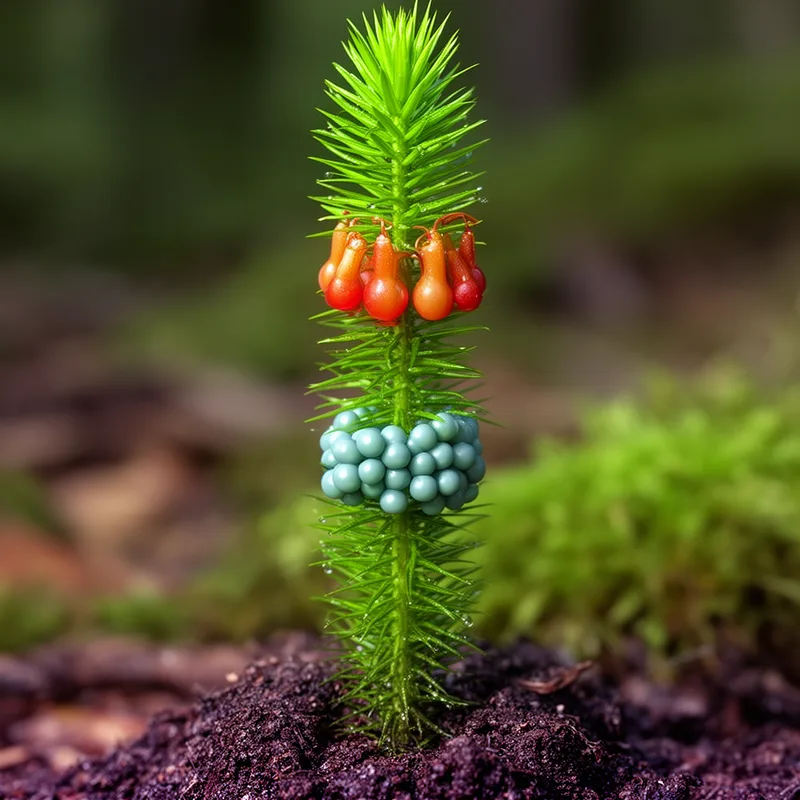
autoicous
- adjective
- /ˌɔːtəʊˈaɪkəs/
- Specialized
- Some mosses are autoicous, producing male and female organs in separate clusters on the same stem.
Examples
-
The autoicous condition increases the likelihood of self-fertilization in liverworts.
-
Researchers noted that autoicous species exhibited both archegonia and antheridia on a single plant.
-
This plant is autoicous.
-
Wow! Look at that autoicous moss!
-
Researchers noted that autoicous species exhibited both archegonia and antheridia on a single plant.
-
Some mosses are autoicous, producing male and female organs in separate clusters on the same stem.
-
The autoicous condition increases the likelihood of self-fertilization in liverworts.
Synonyms


 1
9.9
1
9.9
A plant or animal that has both male and female reproductive parts on the same body

A plant that has different kinds of parts that make sex cells

Having both male and female sex parts on the same plant

Having both male and female reproductive parts in the same body, as in some flowers or animals

Having male, female, and bisexual flowers on the same plant
Surface Forms
Morphology
autoicous = auto + oic + ous
This is a highly specialized botanical term built from classical elements, so an average learner would not infer the meaning from the parts.
Etymology
Autoicous comes from Greek parts auto- meaning 'self', as in automatic, and oikos meaning 'house'. So an autoicous plant has both male and female organs 'in the same house'—on the same individual but in separate clusters—so it can sometimes self-fertilize.