

activated
- adjective
- /ˈæktɪˌveɪtɪd/
- Specialized
- The enzyme becomes activated when it binds to its substrate, enhancing the reaction rate.
Loading YouTube…
Watch on YouTubeAnd I have a question about the neural stem cell, the activated and the quiescent one.
- And I have a question about the neural stem cell, the activated and the quiescent one.
- It's pre activated so it does not build up.
Examples
-
So heat shock proteins, as their name implies, are activated by heat.
-
So they must have some extra genes that are not activated normally.
-
This one is heat activated, so hopefully we get some good heat.
-
And for many different diseases, it's activated by infection and injury.
-
It's skin activated so it only starts buzzing when it hits your skin.
-
Bio batteries made from paper, powered by bacteria, and activated by spit.
-
It is activated charcoal with a sugar swirl.
-
You don't need a ton of stimulation because you've activated the neural pathways.
-
The chemical is activated by sunlight, allowing the reaction to occur.
-
In the lab, we use a special solution that is activated by exposure to heat to speed up the experiment.
Synonyms

 44
3.2
44
3.2

Causing a direct effect, as with a medicine ingredient
Compounds
- Specialized
1
4.1
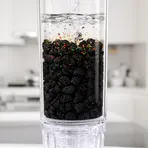
A black material made from carbon with many tiny holes that soaks up poisons and impurities

- Specialized

 1
4.1
1
4.1
A form of carbon with many tiny holes used to trap impurities from air, water, or the body
How Reactive
- Specialized
50
7.0

- Specialized
5
5.1
- Specialized
1
6.5
- Specialized
14
5.9
Surface Forms
Morphology
Etymology
The word activated comes from the root act-, meaning 'to do', and you can see it in active and action. In science it means 'made more ready to react' or 'turned on', like switching a device or molecule so it can work.