
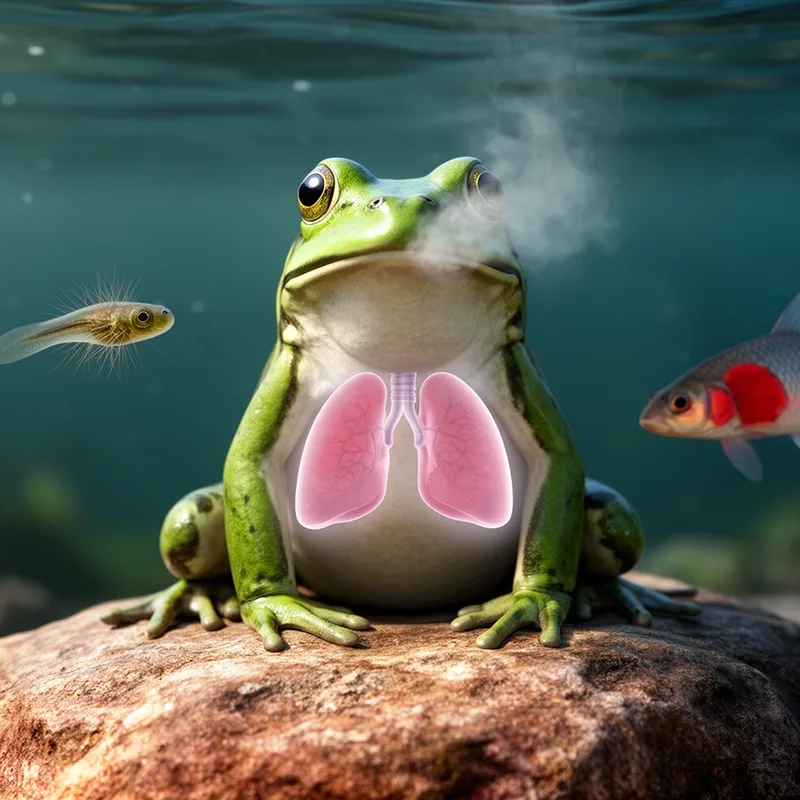
abranchiate
- adjective
- /əˈbræŋkiət/
- Specialized
- Some amphibians become abranchiate as they mature, losing their gills after metamorphosis.
Examples
-
Certain land-dwelling mollusks are abranchiate and rely on lungs for respiration.
-
The abranchiate fish cannot breathe underwater.
-
The evolutionary shift from branchiate to abranchiate organisms marks a significant adaptation to terrestrial life.
-
Many abranchiate animals are adapted to life on land.
-
Certain land-dwelling mollusks are abranchiate and rely on lungs for respiration.
-
Some amphibians become abranchiate as they mature, losing their gills after metamorphosis.
-
Many abranchiate animals have developed adaptations that help them survive in dry environments.
Synonyms
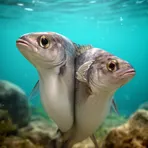
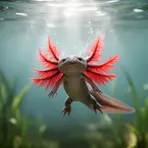
Not having the thin breathing parts on the sides of fish
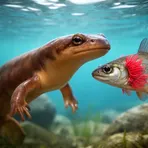
An animal that has no gills
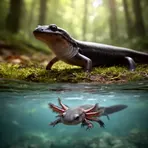
An animal that has no gills for breathing in water
Antonyms

- Specialized
Having thin plates underneath, as in fish for breathing or mushrooms for making spores
Surface Forms
Morphology
abranchiate = branchiate (opaque) = a + branchi + ate
Although formed by the negative prefix 'a-' plus the technical combining form 'branchi-' and the suffix '-ate', the elements are highly specialized and unfamiliar to typical B1 learners, so the meaning 'without gills' is not readily derivable.
Etymology
Abranchiate comes from the parts a- meaning 'without' and branchia meaning 'gills', the breathing organs fish use. So an abranchiate animal is 'without gills', which helps you remember animals like some land snails and adult frogs that breathe air instead.

