
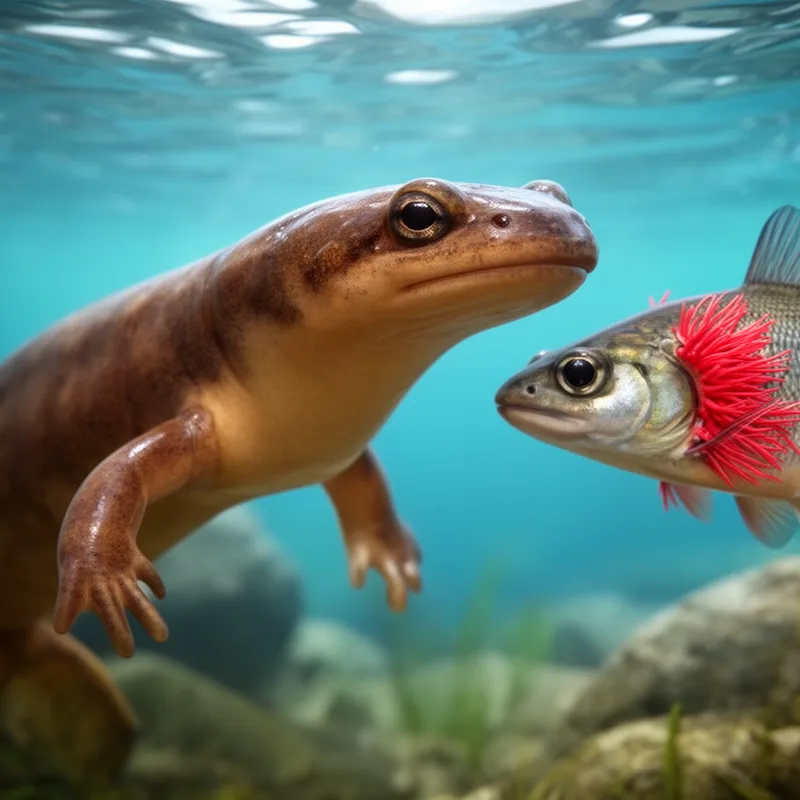
abranchial
- adjective
- /ˌeɪˈbræŋkiəl/
- Specialized
- Certain amphibians are abranchial throughout their adult stage, breathing entirely through their skin and lungs.
Examples
-
The fossil showed no evidence of gill structures, suggesting it was abranchial.
-
Unlike most fish, lamprey larvae are temporarily abranchial during part of their development.
-
The abranchial fish adapted to life in freshwater.
-
Many abranchial species thrive in oxygen-rich environments.
-
Certain amphibians are abranchial throughout their adult stage, breathing entirely through their skin and lungs.
-
The fossil showed no evidence of gill structures, suggesting it was abranchial.
-
Unlike most fish, lamprey larvae are temporarily abranchial during part of their development.
Synonyms

An animal that has no gills and breathes air
An animal that has no gills for breathing in water
Not having the thin breathing parts on the sides of fish
Antonyms

- Specialized
Having thin plates underneath, as in fish for breathing or mushrooms for making spores
Surface Forms
Morphology
Etymology
The word abranchial comes from the prefix a- meaning 'without' and the part branchial, from a Greek word for 'gills', like the common word 'gill'. So abranchial describes an animal that has 'no gills'.

