
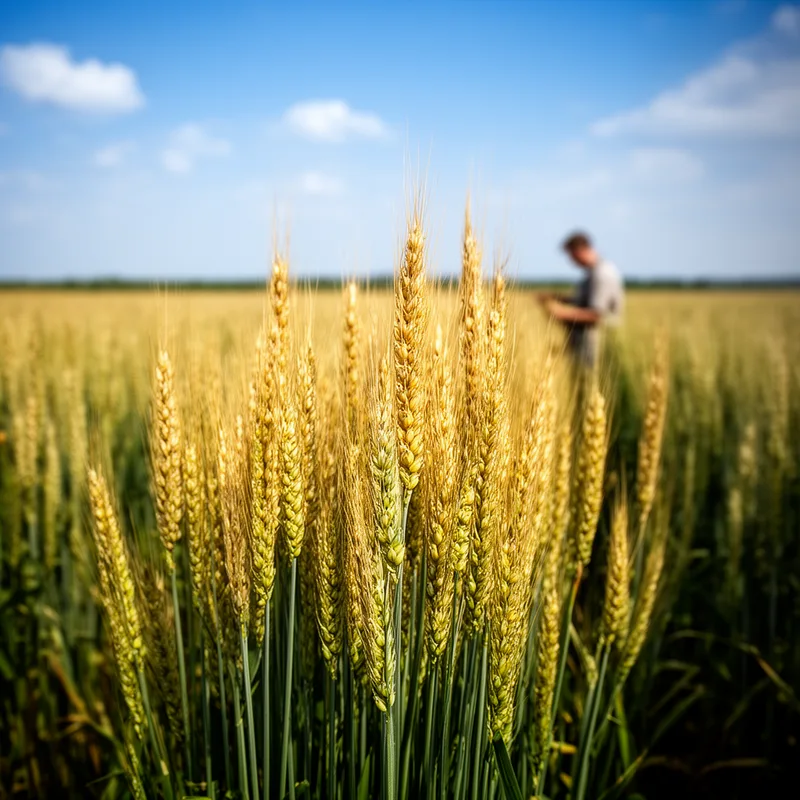
Triticum
- noun
- /ˈtrɪtɪkəm/
- Specialized
- For example, in an unfilled field of wheat (Triticum aestivum,
- Triticum aestivum
Examples
-
Farmers cultivate different species of Triticum to produce various types of wheat.
-
The Triticum genus includes several wheat species that thrive in temperate climates.
-
Or how about Triticum aestivum, wheatgrass.
-
Wheat (Triticum aestivum).
Blog text (1) -
Keywords: Triticum aestivum; net photosynthetic rate; light response curve; photochemical efficiency; yield.
Academic text (2014) -
In Mediterranean agriculture, Triticum plays a vital role in food production.
Compounds


- Specialized
A type of wheat with hard dark grains high in gluten used for pasta and bread

- Specialized
A common type of wheat grown for grain used to make bread and pasta

- Specialized
A kind of wheat also called emmer wheat used for bread and food for animals

- Specialized
A wild wheat from the Middle East that is the ancestor of farmed wheat
Surface Forms
Etymology
Triticum comes from the Latin word triticum, which simply meant 'wheat' and grew from a root trit- meaning 'to rub'. Think of rubbing or grinding grain to make flour, so the name describes the plant we know as wheat and the way people processed it.

