

Tartar
 7
9.9
7
9.9

- noun
- /ˈtɑrtər/
- In the 13th century, the Tartars invaded parts of Russia, leaving a significant impact on its history.
- nomadic Tartars
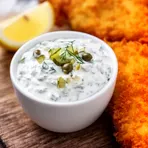
- Tartar sauce
- Tartar camp
Examples
-
After the battle, the king celebrated his victory over the Tartars, who had previously threatened his kingdom.
-
Ivan, the Third of Moscow faced down the Tartar army and forced it to retreat.
-
By the way, my boss is an ethnic Tartar and a Muslim.
Blog text (5) -
You have no need to worry about Kaidu the Tartar.
-
Unquestionably, it was the Tartar face he knew so well, with the high cheekbones and the angled eyes.
Fiction book (2000) -
A regiment of Tartars with wolf dæmons guards it.
-
Nomadic Tartars nourished and warmed him, carrying him across the snows to safety.
Fiction book (2000) -
Chechens were Tartars, a western tide of the Golden Horde that had settled in the fastness of the Caucasus Mountains.
Fiction book (1992) -
Ivan conquered Tartar lands in Kazan and Astrakhan, but was defeated in the Livonian War by Sweden and the Polish Lithuanian Commonwealth.
-
Many stories speak of the nomadic lifestyle of the Tartars and their complex culture in central Asia.
Synonyms
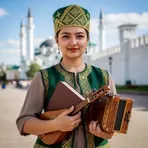 2
8.2
2
8.2
A person from a Turkic-speaking ethnic group mainly in Russia and Central Asia
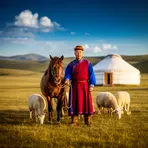

 1
6.5
1
6.5
A person from Mongolia or from groups who move with their animals on the grasslands
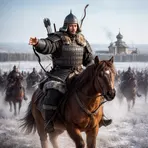
A person from the Mongolian people of Central Asia who invaded Russia in the 1200s
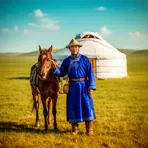
A person from Mongolia who lives as a nomad on the steppe
Idioms

Compounds



Surface Forms
Etymology
The word Tartar comes from the name Tatar, which named a real group of peoples from central Asia. Europeans later added an extra 'r' and compared them to Tartarus, a Greek word for 'hell', because they feared the group's fierce attacks, so Tartar came to mean those Mongolian peoples who invaded parts of Russia and Eastern Europe.