

Sapindus saponaria
- noun
- /sæˈpɪndəs səˈpɒnəriə/
- Specialized
- Native Americans traditionally used the fruit of the Sapindus saponaria tree as a natural soap.
Examples
-
The Sapindus saponaria thrives in warm, tropical climates across Central and South America.
-
Researchers are studying the saponin content in Sapindus saponaria for potential industrial applications.
-
The Sapindus saponaria tree grows well in tropical climates.
-
Have you heard about Sapindus saponaria and its uses?
-
Native Americans traditionally used the fruit of the Sapindus saponaria tree as a natural soap.
-
The Sapindus saponaria tree produces fruit that contains saponin, which serves as an effective cleanser.
-
Farmers in tropical regions harvest the fruit of the Sapindus saponaria to make a biodegradable soap.
Synonyms

A tropical evergreen tree whose fruit's soft inside people use as soap

An evergreen tree with soft fruit used as natural soap
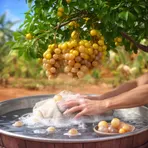
A tree or its fruit from warm countries that people use as natural soap
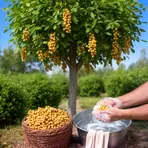
A tree that makes berries used as natural soap

A group of trees and shrubs with fruits called soapberries used as natural soap

A tree or shrub that makes berries used as natural soap

An evergreen shrub or small tree from tropical America with soft fruit used as natural soap
Surface Forms
Morphology
The name combines a genus known for soapnuts (Sapindus) with a species epithet meaning 'soap-producing' (saponaria), so the overall sense 'a tree that yields soap-like fruit/saponin' is directly inferable from the parts. Botanical binomial formations are compositional rather than idiomatic, so a learner who knows both constituents would readily understand this referent.
Etymology
Sapindus saponaria, with the parts Sapindus and saponaria, comes from the tree's fruit that makes soap-like bubbles. Native Americans used the fruit to wash clothes and hair, so the name points to its use as a natural 'soap'.

