

Portuguese
 10
2.6
10
2.6

- noun
- /ˌpɔr.tʃəˈɡiz/
- The Portuguese have little flair for outdoor pursuits.
- Portuguese in Macau
- contact with the Portuguese
- Portuguese arrived
Loading YouTube…
Watch on YouTubeThe Spanish didn't have an African Fort, so instead bought slaves, mostly from the Portuguese and the Genoese, but later the Dutch, French and British.
- The Spanish didn't have an African Fort, so instead bought slaves, mostly from the Portuguese and the Genoese, but later the Dutch, French and British.
- The Dutch rise and replace to a large degree the the Portuguese in in in Asia.
- He got arrested from a whole team of Italians, Spanish, Portuguese.
Examples
-
Built by the Portuguese, centuries ago.
-
The village itself is small and, in the days of the Portuguese, must have been very beautiful.
Academic text (1996) -
So in the the Spanish and Portuguese, we were able to make friends, We had an active social life.
-
And his Portuguese is really coming on.
-
I recall that even the Portuguese said that Brazilian Portuguese is more beautiful.
Blog text (20) -
That's five Portuguese women in one place.
-
But when you hear Portuguese people talking, they do not sound like they're speaking Spanish.
-
As a fellow Portuguese Masshole, I need to know what your favorite Portuguese dessert is.
-
Therefore, practically all the Portuguese interviewed had either direct or indirect experience of union activity and strikes.
Academic text (1992) -
As a Portuguese native, he had a deep appreciation for his country's rich history.
Compounds
 1
8.8
1
8.8
A large sea animal with a float and long tentacles that can sting people

 1
2.7
1
2.7
A language spoken mainly in Portugal and Brazil and in some African and Asian countries

- Literature
A former name for Guinea-Bissau, a country on the west coast of Africa that was a Portuguese colony until 1974


A tall evergreen tree with hanging branches native to Mexico and introduced to Portugal
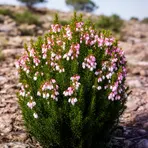
An evergreen shrub with dense leaves and small pink or white bell-shaped flowers
Surface Forms
Morphology
Etymology
Portuguese for a person comes from the country name Portugal, which first meant 'port of Cale', so a Portuguese is simply someone 'from Portugal'.