

Portuguese
 20
2.8
20
2.8

- noun
- /ˌpɔr.tʃəˈɡiz/
- And that's why all Brazilians speak Portuguese today.
- speak Portuguese
- Portuguese, the official language
Loading YouTube…
Watch on YouTubeI want libertadgi, which in Portuguese means freedom.
- I want libertadgi, which in Portuguese means freedom.
- I in Brazil we speak Portuguese, not Spanish.
- And now they have subtitles in French, German, Spanish and Portuguese for all the classes.
- I'm a big fan of sometimes doing video that is both in Portuguese and English.
- He goes, this is what he says in in Portuguese so you understand what he's saying.
- You know that the real naked choke translated into Portuguese is killed the lion.
- Yeah, because I I, you know, I don't speak Portuguese.
- You speak at what's called patois, pigeon English, a combination of Dutch, French, English, Creole, Portuguese, all kind of mishmashed together.
- You speak at what's called patois, pigeon, English, a combination of Dutch, French, English, Creole, Portuguese, all kind of mishmash together.
- I was actually raised by live in maids, which is why I spoke my first words in Portuguese.
- So you say, well, in China they speak Chinese and Korea they speak Korean, in Brazil they speak Portuguese.
Examples
-
You should learn a little Portuguese if you plan to travel to Brazil.
-
A 40-question multiple choice test was adapted and translated to Portuguese from a test developed by Brynteson (1980).
Academic text (1992) -
Like when she would speak Portuguese, it was like Spanish but also like Russian.
-
See everybody from here, whether it's English or French or Portuguese, everybody went to India.
-
You should learn a little Portuguese.
-
I'm a big fan of sometimes doing video that is both in Portuguese and English.
-
Most of the published research on the region is in Portuguese, little known outside Brazil.
Academic text (2001) -
Her native language was Portuguese; however, she also spoke English and Spanish fluently.
Academic text (2015) -
And you speak Portuguese.
-
In Macau, the majority of Macanese cannot read or write Portuguese, the official language of Macau.
Academic text (1999)
Synonyms

 1
2.7
1
2.7
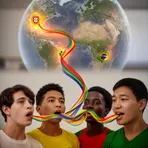
A language spoken mainly in Portugal and Brazil and in some African and Asian countries
Compounds
 1
8.8
1
8.8
A large sea animal with a float and long tentacles that can sting people
1
2.7
A language spoken mainly in Portugal and Brazil and in some African and Asian countries

- Literature
A former name for Guinea-Bissau, a country on the west coast of Africa that was a Portuguese colony until 1974


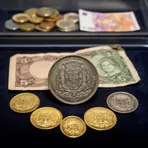
A tall evergreen tree with hanging branches native to Mexico and introduced to Portugal
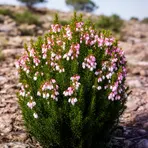
An evergreen shrub with dense leaves and small pink or white bell-shaped flowers
Surface Forms
Morphology
Etymology
Portuguese as a language is named after Portugal, a name that began as 'port of Cale' with portu- meaning 'port'. So the language people speak in Portugal, Brazil and other places is called Portuguese.