
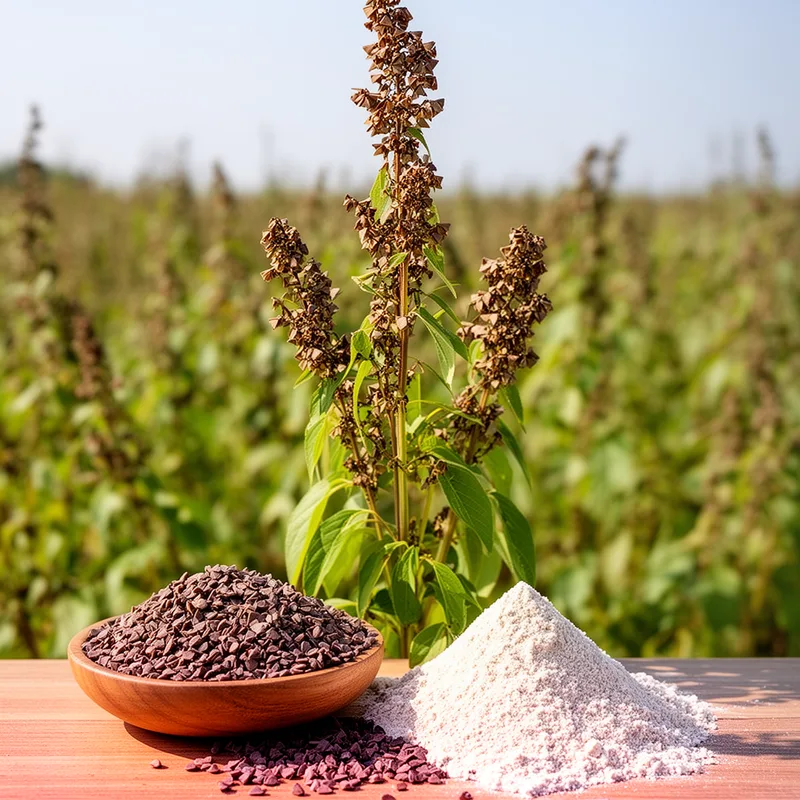
Polygonum fagopyrum
- noun
- Specialized
- The seeds of Polygonum fagopyrum are ground to make gluten-free flour used in many Asian recipes.
Examples
-
Farmers grow Polygonum fagopyrum for its nutritious seeds.
-
In many Asian countries, Polygonum fagopyrum is recognized for its clusters of small pinkish white flowers and edible seeds.
-
Polygonum fagopyrum thrives in cool climates and is valued for its short growing season.
-
Farmers in Russia often cultivate Polygonum fagopyrum for both its flowers and its nutritious seeds.
-
The plant Polygonum fagopyrum is often used in gluten-free recipes.
-
Farmers in Russia often cultivate Polygonum fagopyrum for its nutritious seeds, which are used in various dishes.
-
The seeds of Polygonum fagopyrum, known as buckwheat, can be ground into flour for gluten-free baking.
Synonyms

 3
6.3
3
6.3

A plant that grows each year with small white or pink flowers and triangular seeds used for food

A yearly Asian plant that produces edible triangular seeds used whole or ground into flour
Surface Forms
Morphology
This is a Latin binomial (genus + species); if a learner knows 'Polygonum' is a genus of knotweeds and 'Fagopyrum' is a genus associated with edible seeds, they can infer this refers to a plant (buckwheat). Binomial taxonomic naming is cross-linguistically regular and compositional, so the meaning is directly derivable from the parts.
Etymology
Polygonum fagopyrum may come from old words meaning 'beech' and 'wheat', because the second part fagopyrum points to seeds that look like tiny beech nuts and were used like wheat to make 'flour'. So the name helps you remember this plant is the one with triangle-shaped, nut-like seeds used for food, commonly called buckwheat.