
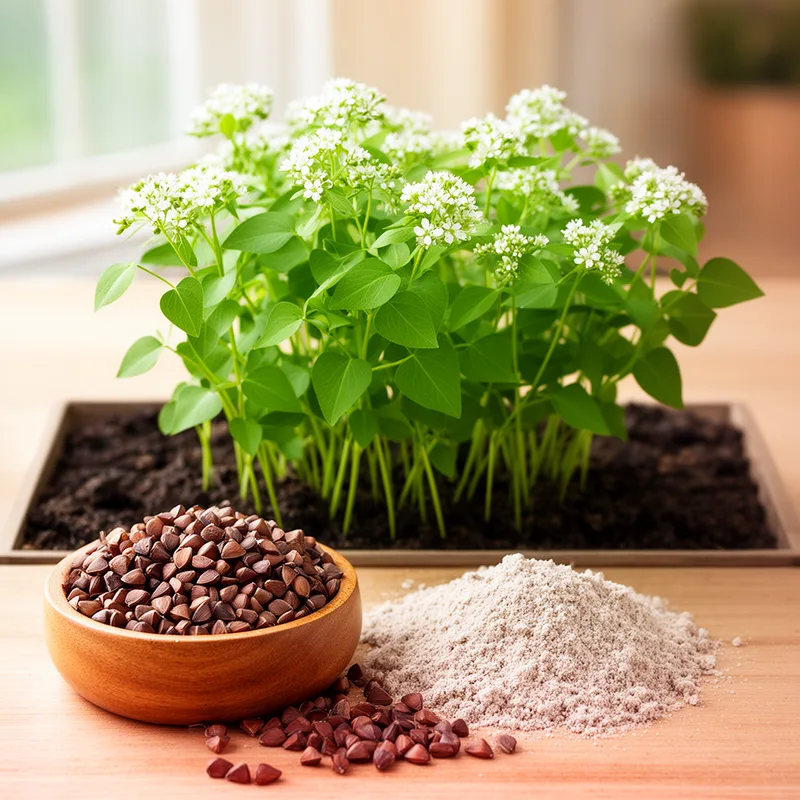
Fagopyrum esculentum
- noun
- Specialized
- Fagopyrum esculentum is widely cultivated for its nutritious seeds, commonly referred to as buckwheat.
Examples
-
The flour made from Fagopyrum esculentum seeds is popular in gluten-free diets.
-
Many traditional Asian dishes use the seeds of Fagopyrum esculentum as a staple ingredient.
-
I love cooking with Fagopyrum esculentum flour.
-
Are you familiar with Fagopyrum esculentum?
-
Fagopyrum esculentum, commonly known as buckwheat, is often used to make pancakes and noodles.
-
In my garden, I grow Fagopyrum esculentum for its edible seeds, which are rich in nutrients.
-
The seeds of Fagopyrum esculentum are ground into flour that can be used in various recipes.
Synonyms

 3
6.3
3
6.3

A plant that grows each year with small white or pink flowers and triangular seeds used for food
A plant with small triangular seeds that are eaten or ground into flour
Surface Forms
Morphology
Fagopyrum + esculentum
The binomial is compositional: 'Fagopyrum' names the plant genus and 'esculentum' (Latin) means 'edible', so the phrase denotes an edible species of Fagopyrum (i.e., buckwheat) which is directly derivable from the constituents. Although scientific Latin is specialized, the genus+epithet pattern is systematic and cross-linguistically recognized, so a learner who knows both constituent meanings would understand the MWE.
Etymology
Fagopyrum esculentum comes from old Latin words that make a clear picture: Fagopyrum relates to 'beech' because the plant's small seeds look like tiny beech nuts, and esculentum means 'edible' or fit to eat. So the name is like 'edible beech-wheat', which helps explain why this plant gives the seeds we call buckwheat and why people use them like a grain today.