

Old World porcupine
- noun
- /oʊld wɜrld ˈpɔrkjʊpaɪn/
- UK
- The Old World porcupine defends itself with sharp, stiff quills when threatened by predators.
Examples
-
Unlike its American relatives, the Old World porcupine prefers to forage on the ground rather than climb trees.
-
Researchers observed an Old World porcupine searching for food at dusk near the edge of the forest.
-
The Old World porcupine is known for its sharp quills.
-
Have you ever seen an Old World porcupine in the wild?
-
Researchers observed an Old World porcupine searching for food at dusk near the edge of the forest.
-
The Old World porcupine defends itself with sharp, stiff quills when threatened by predators.
-
Unlike its American relatives, the Old World porcupine prefers to forage on the ground rather than climb trees.
Synonyms
 28
2.8
28
2.8

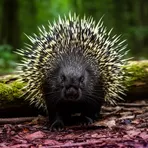
A large animal with sharp quills on its back that protect it
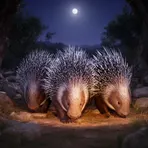
A group of large porcupines from Europe, Asia, and Africa that are active at night
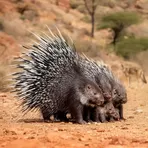
A family of large porcupines from Africa, Europe, and Asia with sharp quills for protection
Surface Forms
Morphology
The noun 'porcupine' is fully transparent so learners will recognise this as a type of porcupine, but the modifier 'Old World' is a conventional geographic label (meaning Eurasia/Africa) that does not follow directly from the literal meanings of 'old' + 'world'. Because the phrase combines a transparent head with a somewhat conventionalized modifier whose precise biogeographical sense a B1 learner may not predict, the expression is only partially transparent.
Etymology
Old World porcupine comes from the phrase Old World, which early explorers used for Europe, Asia and Africa, and porcupine is the spiky rodent that lives there. So, the name means a porcupine from those lands.