
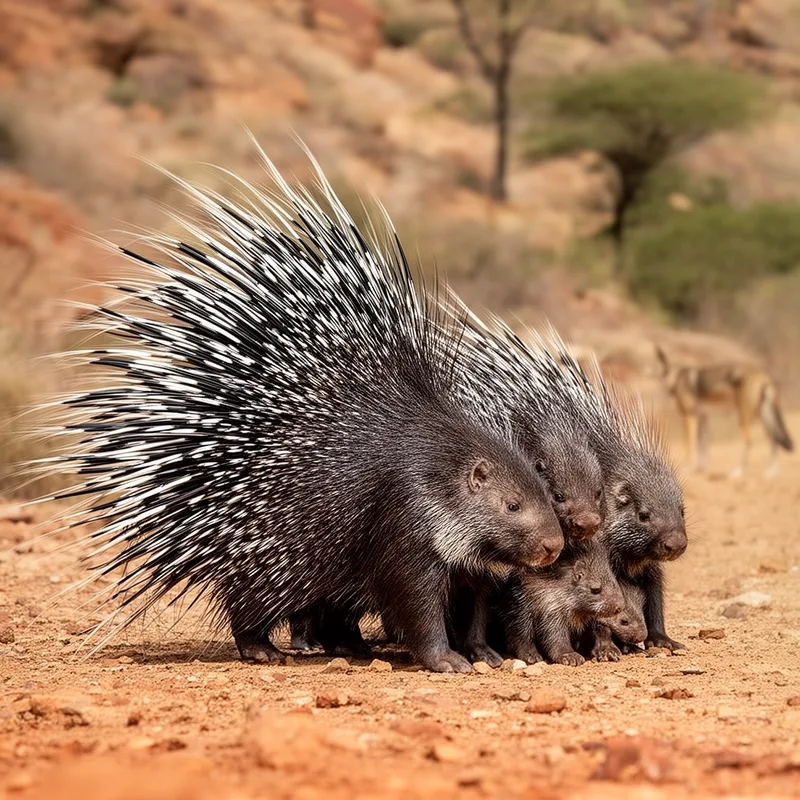
Hystricidae
- noun
- /hɪˈstrɪkɪdi/
- Specialized
- Members of the Hystricidae family inhabit Africa, southern Europe, and parts of Asia.
Examples
-
Unlike the North American porcupines, Hystricidae have shorter, stouter bodies and larger quills.
-
Did you know that Hystricidae are primarily nocturnal?
-
The Hystricidae are distinguished from their New World counterparts by differences in skull structure and quill arrangement.
-
The Hystricidae family includes several species of porcupines.
-
The Hystricidae family is known for its ability to roll into a ball for protection against predators.
-
Species classified under Hystricidae typically have a diet consisting of leaves, fruits, and roots.
-
In the wild, Hystricidae can often be found foraging at night in search of food.
Synonyms
A group of large porcupines from Europe, Asia, and Africa that are active at night

A large rodent with sharp quills that lives in Europe, Asia, or Africa
Compounds
- Specialized
A group of large porcupines from Europe, Asia, and Africa that are active at night
Surface Forms
Etymology
Hystricidae comes from the Greek word hystrix, meaning 'porcupine' or 'spiny', plus the ending -idae, which shows an animal 'family'. So Hystricidae names the family of Old World porcupines famous for their spiny coats.

