
Mesozoic
- noun
- /ˌmɛzoʊˈzoʊɪk/
- Specialized
 :
mesozoico
:
mesozoico
- Many of the world's major landmasses began breaking apart during the Mesozoic.
Examples
-
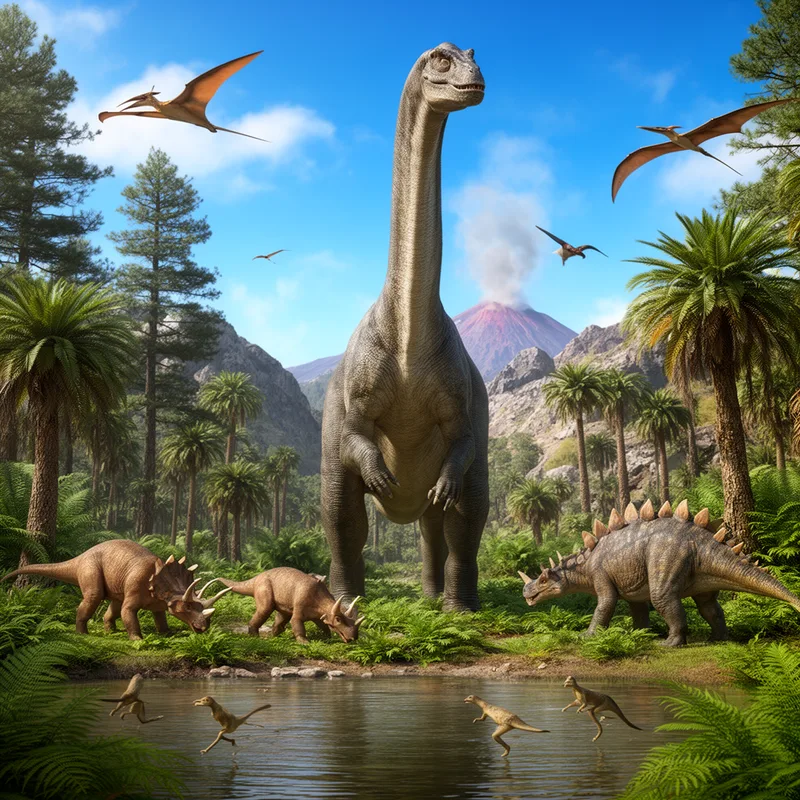
The Mesozoic era is often called the Age of Reptiles due to the dominance of dinosaurs.
-
The Mesozoic era is known for the rise of dinosaurs.
-
Important plant and animal evolution occurred throughout the Mesozoic period.
-
During the Mesozoic, many species evolved rapidly.
-
The fossils found in that rock layer date back to the Mesozoic era, when dinosaurs roamed the Earth.
-
Scientists study the Mesozoic period to understand the evolution of dinosaurs and ancient plants.
-
During the Mesozoic, diverse species of dinosaurs evolved and thrived in various ecosystems.
Synonyms

 1
7.2
1
7.2

A time about 230 to 63 million years ago when dinosaurs lived and early mammals and birds appeared


 1
8.0
1
8.0
A long time 230 to 63 million years ago when reptiles like dinosaurs lived on Earth
Compounds
- Specialized
1
7.2
A time about 230 to 63 million years ago when dinosaurs lived and early mammals and birds appeared
Surface Forms
Etymology
Mesozoic comes from Greek parts meso- meaning 'middle' and -zoic from zoe meaning 'life' or 'animals', the same root as zoo. So Mesozoic literally means 'middle life' and names the era in Earth's history in the middle between earlier and later eras when dinosaurs and large reptiles were common.