
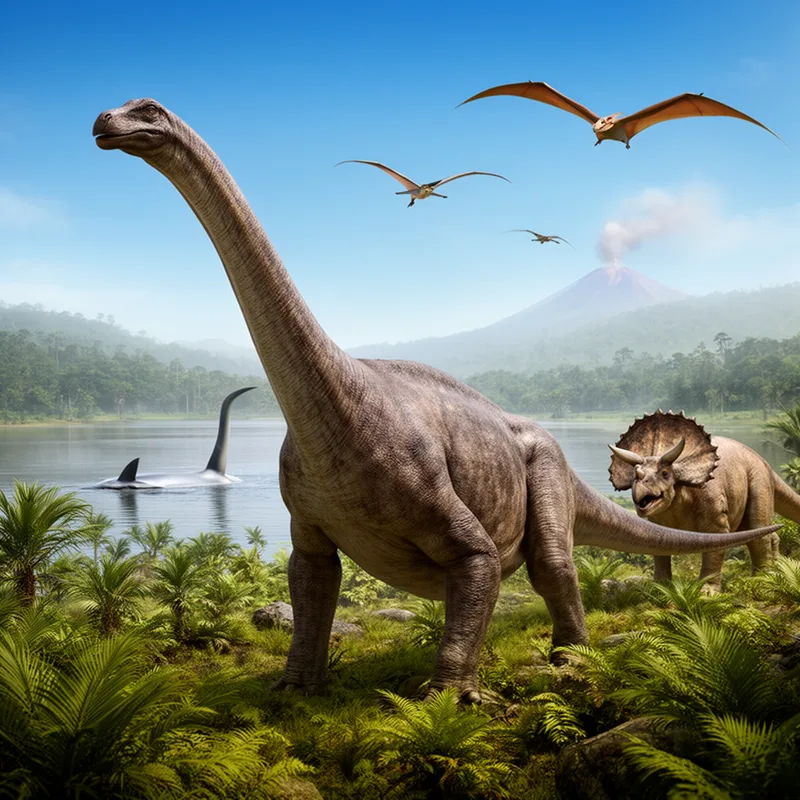
Age of Reptiles


 1
8.0
1
8.0
- noun
- Specialized
- Scientists believe that the Age of Reptiles played a crucial role in the evolution of modern birds.
Examples
-
Many dinosaur fossils have been found from the Age of Reptiles.
-
The dinosaurs thrived during the Age of Reptiles, which lasted for millions of years.
-
Paleontologists study the Age of Reptiles to understand Earth's prehistoric life.
-
The extinction event at the end of the Age of Reptiles led to the rise of mammals.
-
The Age of Reptiles lasted for millions of years.
-
During the Age of Reptiles, dinosaurs roamed the Earth.
-
Fossils from the Age of Reptiles provide valuable insights into ancient ecosystems.
Synonyms
 1
7.2
1
7.2
A time about 230 to 63 million years ago when dinosaurs lived and early mammals and birds appeared
A period about 230 to 63 million years ago when dinosaurs were the main animals
Surface Forms
Morphology
The phrase is directly compositional: 'age' means a historical period, 'of' links to the noun, and 'reptiles' names the class of animals, so the overall meaning is a period characterized by reptiles (i.e. the Mesozoic). This 'Age of X' pattern is cross-linguistically common, so a B1 learner who knows the constituents would grasp the general meaning even if they don't know the exact dates.
Etymology
Age of Reptiles comes from the idea that, for a very long time, reptiles like dinosaurs were the main animals on Earth. The word age means a long 'period' and reptiles are those animals, so the phrase means the time when reptiles 'ruled' the land.