
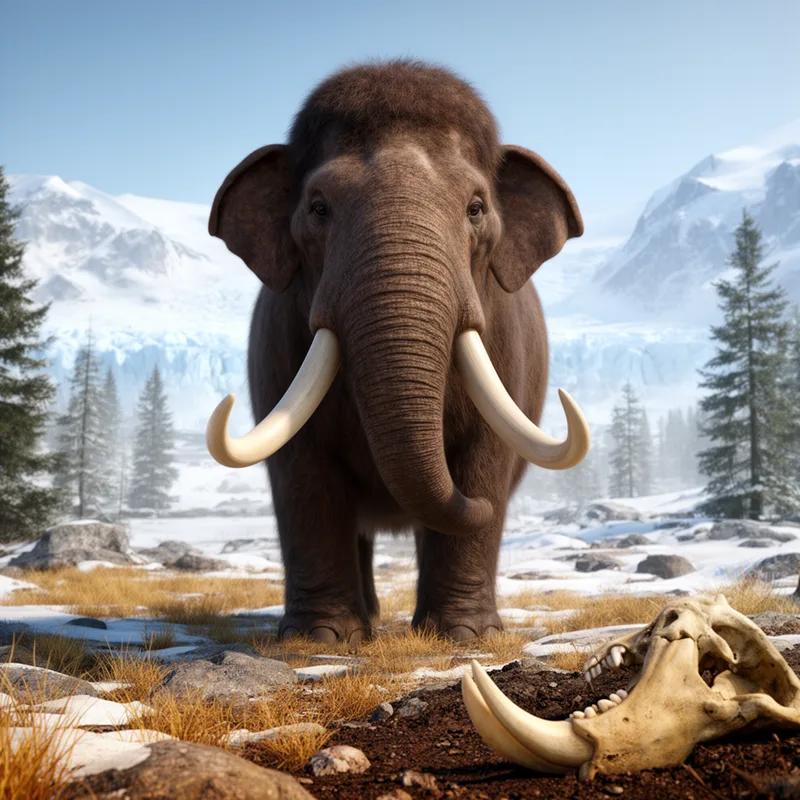
Mastodon
 7
9.9

- noun
- /ˈmæstəˌdɒn/
- Specialized
- The animals they hunted included tapirs, mammoths, mastodons, and giant sloths.
- mastodons and mammoths
Loading YouTube…
Watch on YouTubeHe'd seen men smile, cry out and joy as the mastodons descended upon them.
- He'd seen men smile, cry out and joy as the mastodons descended upon them.
- They Saber toothed tigers, mastodons, mammoths.
Examples
-
"In the beam were two very large tusks still attached to a mastodon skull.
Fiction book (2000) -
Marie flashed her light around the cave and saw that the mastodon had not died alone.
Fiction book (2000) -
A moment later, the old mastodon was dead.
Fiction book (1991) -
Thousands of years ago, before this was desert, it used to be something—probably a feeding ground for mastodons.
Fiction book (2002) -
Before the ape and the elephant as well, before the wolf, the bison, the whale, before the mammoth and the mastodon in the time of the dinosaurs.
-
Similarly, mastodons and woolly mammoths, extinct since the last ice age, are routinely uncovered with the flesh intact (32, 33).
Academic text (1993) -
Large-bodied species were particularly hard hit: mammoths and mastodons, American horses and camels, giant ground sloths, cave bears, and saber-toothed cats all went extinct.
Academic text (2007) -
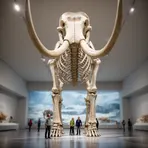
The skeleton of a mastodon found in the museum demonstrates how large these ancient mammals were.
-
Researchers discovered fossilized remains of a mastodon in the ice, revealing details about its habitat.
-
Paleontologists believe that the mastodon lived in North America during the late Pleistocene epoch.
Synonyms

 1
9.9
An extinct animal like an elephant with pointed back teeth for eating leaves
 1
9.9
A very large animal like an elephant that lived long ago and is now extinct
A group of extinct large animals like hairy elephants called mastodons
Compounds
 1
9.9
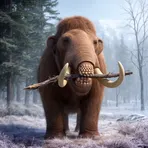
A large extinct elephant-like animal with cone-shaped teeth that lived in North America long ago
Surface Forms
Etymology
Mastodon comes from Greek parts masto- 'breast' and -don 'tooth'. Scientists gave this name because the animal's large teeth had round bumps that looked a bit like breasts, and that strange tooth shape helps us recognise this extinct, elephant-like animal.