
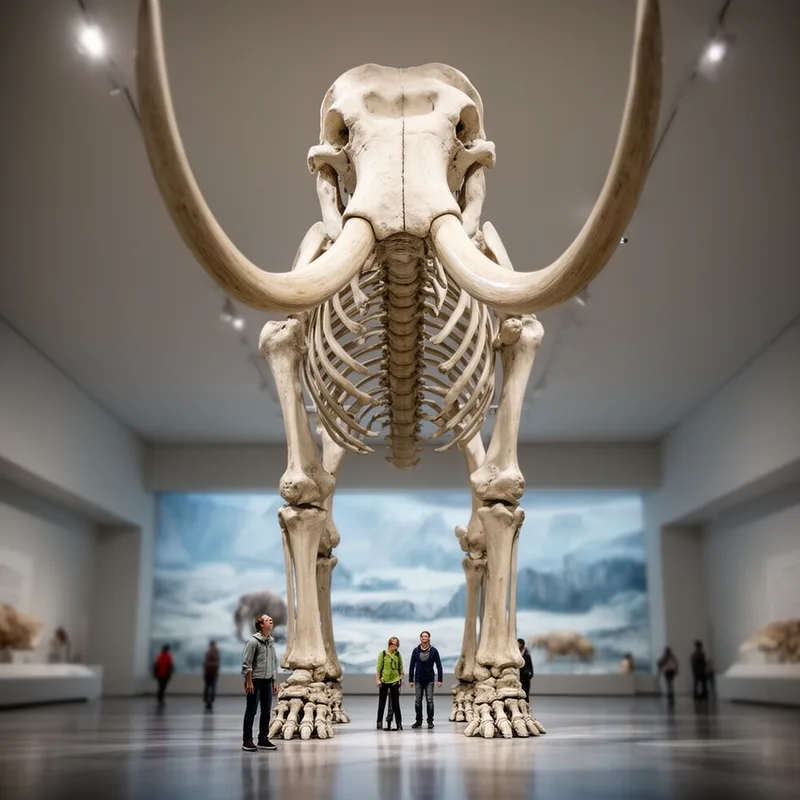
Mammut


 1
9.9
- noun
- /ˈmæmʊt/
- Specialized
- The Mammut is related to modern elephants, but it is much larger and has long, curved tusks.
Examples
-
Fossils of the Mammut show that these giant mammals roamed the Earth during the Ice Age.
-
Scientists study the Mammut to learn more about the climate conditions of the Pleistocene period.
-
A Mammut skeleton is the centerpiece of the museum’s prehistoric exhibit.
-
Scientists believe the Mammut roamed the Earth millions of years ago.
-
The fossilized remains of the Mammut were discovered in the North American plains.
-
The Mammut was a massive creature that roamed the Earth long ago.
-
Many Mammuts have been discovered in the frozen tundra of Siberia.
Synonyms
 7
9.9
A large extinct animal like an elephant with long tusks that lived long ago
A group of extinct large animals like hairy elephants called mastodons
Compounds
- Specialized
A large extinct animal like an elephant that lived in North America
Surface Forms
Etymology
Mammut comes from the Russian word mamont, a name people used for the huge, elephant-like bones they found in frozen ground. That Russian word probably comes from a Siberian language and gave the image of a giant animal 'from the earth', so Mammut now means a very large, ancient elephant-like creature.