

Lappish
- noun
- /ˈlæpɪʃ/
- Offensive
- The Lappish language is spoken across parts of Norway, Sweden, Finland, and Russia.
Examples
-
She decided to study Lappish as part of her research into Uralic languages.
-
Many traditional songs are still sung in Lappish by the Sámi people.
-
The Lappish language is unique in its structure.
-
Many people are learning Lappish today.
-
Many traditional songs are still sung in Lappish by the Sámi people.
-
She decided to study Lappish as part of her research into Uralic languages.
-
The Lappish language is spoken across parts of Norway, Sweden, Finland, and Russia.
Synonyms

 1
9.9
1
9.9

A language spoken by the Sámi people in northern Scandinavia and northwest Russia


 1
9.9
1
9.9
The language spoken by Sami people in northern Scandinavia and northwest Russia

A language spoken by the Sami people in northern Europe

A language spoken by the Sami people in northern Europe

Languages spoken by the Sámi people in northern Scandinavia, Finland, and Russia

A group of related languages spoken by the Sami people in northern Scandinavia and northwest Russia

A language spoken by the Sami people in northern Scandinavia
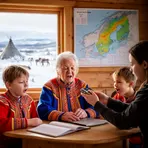
A language spoken by the Sami people in northern Scandinavia and the Kola Peninsula

A language spoken by the Sámi people in northern Scandinavia, now usually called Sámi
Compounds
Surface Forms
Morphology
Lappish = Lapp (transparent) = Lapp + ish
Formed directly from the ethnonym 'Lapp' with the productive adjectival suffix '-ish'; the noun meaning 'the Lapp language' follows a common pattern (e.g., 'English').
Etymology
Lappish comes from the older name Lapp for the Sámi people and the region Lapland, and the English ending -ish means 'related to', as in English or Spanish. So Lappish means the language or things 'related to' the Lapp people, though today many prefer the name Sámi rather than Lapp.