

Japanese plum
- noun
- We picked several ripe Japanese plums from the tree in the garden.
Examples
-
Compared to European varieties, a Japanese plum often has a tarter taste.
-
The Japanese plum thrives in warm climates with well-drained soil.
-
The Japanese plum tree blooms beautifully in spring.
-
I love the taste of Japanese plums in summer.
-
We picked several ripe Japanese plums from the tree in the garden.
-
The Japanese plum thrives in warm climates with well-drained soil.
-
I love the taste of Japanese plums in summer.
Synonyms
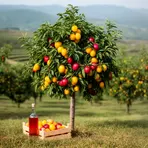
A small tree from China and Japan that produces large yellow or red plums often called the Japanese plum
Surface Forms
Morphology
The meaning 'a plum/tree associated with Japan' is directly and transparently derived from combining 'Japanese' (of or connected with Japan) and 'plum' (the fruit/tree). This is a regular adjective+noun composition indicating origin or type, so a B1 learner who knows both words will readily infer the MWE's meaning.
Etymology
Japanese plum was called that because these plums came from Japan, so think of a small tree heavy with yellow to red plums that are often more sour than European ones. That's why the name means 'a small tree that produces large yellow to red plums, typically less sweet than European plums'.

