

Japanese plum
- noun
- /ˈdʒæpəˌniːz plʌm/
- She made a delicious jam from fresh Japanese plum fruit picked from her garden.
Examples
-
I made a delicious jelly from Japanese plums.
-
The Japanese plum has a unique flavor that is both sweet and tart, perfect for desserts.
-
We planted a Japanese plum tree in our backyard last spring.
-
Look at that Japanese plum!
-
She made a delicious jelly from fresh Japanese plum fruit that she harvested in her garden.
-
My mother loves to use Japanese plum in her recipes for making unique jams and desserts.
-
Each summer, we enjoy picking ripe Japanese plum fruits to create flavorful jellies.
Synonyms


 1
9.6
1
9.6
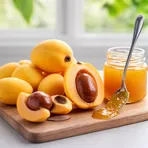
A small yellow fruit with a large stone and little flesh often used for jam
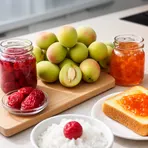
A small Japanese plum used to make pickles and jam
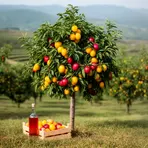
A small tree from China and Japan that produces large yellow or red plums often called the Japanese plum
Surface Forms
Morphology
The meaning 'a plum/tree associated with Japan' is directly and transparently derived from combining 'Japanese' (of or connected with Japan) and 'plum' (the fruit/tree). This is a regular adjective+noun composition indicating origin or type, so a B1 learner who knows both words will readily infer the MWE's meaning.
Etymology
Japanese plum is named after fruit from East Asia and brings to mind a small, yellow, olive-sized fruit with a big stone that people cook into jam. That's why the name refers to 'a yellow, olive-sized semitropical fruit with a large central stone and little flesh'.