
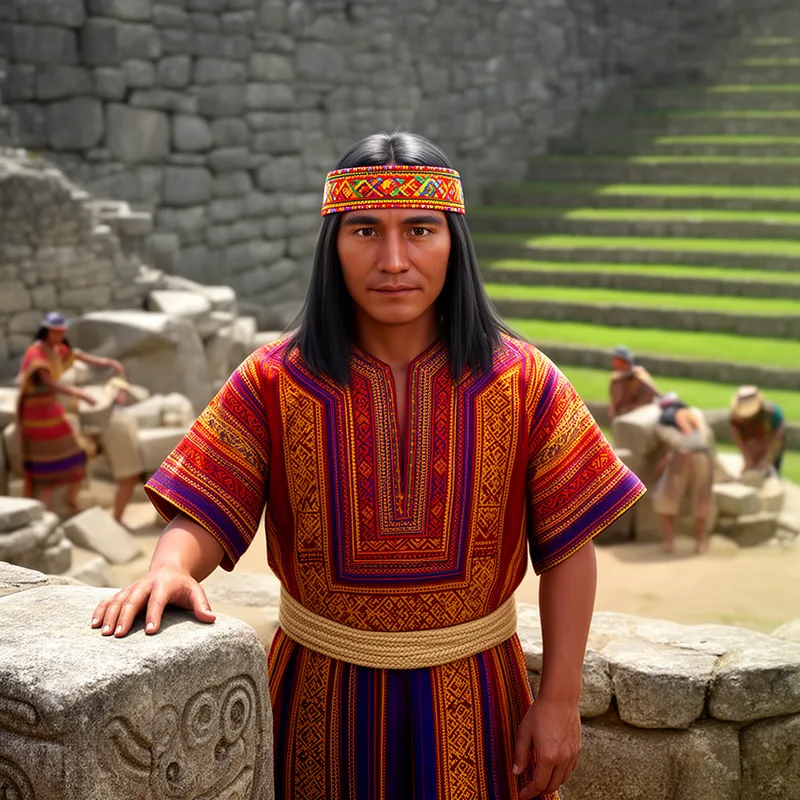
Inca
- noun
- /ˈɪŋkə/
- And if you'd had time to take in Peru, you'd have thought the Incas had something quite impressive going on, and the Aztecs in Mexico too.
Loading YouTube…
Watch on YouTubeAnd I said, how in the world did these Incas, I think that's what they were called, and they're native, native Peruvian Indians.
- And I said, how in the world did these Incas, I think that's what they were called, and they're native, native Peruvian Indians.
- Once the Inca took over, like no one in the Inca empire starved.
- We would have plazas, corridors, we would have Inca terraces, accurate system, drainage system.
- Not Pizarro, but who is the one who went to the Incas?
- You see the Mayas, the Aztec or the Incas, they can see the Spaniard coming and they have believed that.
- More than just the Incas counting system, but also some interesting new type of writing system.
- He says that was the Inca or the indigenous people at that time looking for gold and silver.
- So the Hapsburg touched, the Hapsburgs touched all kinds of people, including the Aztecs, including the Inca.
Examples
-
Like the Aztecs, the Inca relied on cotton armor.
-
Imperial Inca songs, poetry, and associated performances would enact the memory of imperial persons and events.
Academic text (2007) -
Thus the great Inca Empire fell even faster than it had risen.
-
His example is the Inca Empire and shows how it was deeply self divided.
-
We would have plazas, corridors, we would have Inca terraces, accurate system, drainage system.
-
(n38) Inca songs, which the Spanish referred to as cantares, were elements of commemorative ceremonies, mourning rituals, military celebrations, religious festivals, and many other official gatherings.
Academic text (2007) -
Just beyond the massive seventeenth-century doors are walls made of imperial Inca stones and Spanish colonial adobe bricks, along with extensive murals, paintings, and an intricate Mudejar ceiling.
Academic text (2007) -
The Inca civilization was known for its advanced agricultural techniques and impressive stone constructions.
-
Many historians study the Inca people to understand the complexities of their empire and its decline.
-
Artifacts from the Inca era, such as pottery and textiles, provide insight into their daily life and culture.
Synonyms
 1
7.9
1
7.9

A person from the Inca people who lived near Cuzco in Peru


 1
8.6
1
8.6
A person from the Quechua people near Cuzco who built a large empire in the Andes before the Spanish conquest
A person from the native people of the Andes who once ruled in the Inca Empire

A person from a native people in Peru who was once part of the Inca ruling class
Surface Forms
Etymology
Inca comes from the Quechua word inka, which meant 'ruler' but later was used for the whole people and their empire, so today Inca can mean a member of that ancient civilization.