

Erigeron canadensis
- noun
- /ˌɛrɪˈdʒiːrɒn kəˈnædɛnsɪs/
- Specialized
- Gardeners often struggle to control Erigeron canadensis because of its prolific seed production.
Examples
-
Native to North America, Erigeron canadensis has spread to many other temperate regions worldwide.
-
Many farmers consider Erigeron canadensis a troublesome weed.
-
Erigeron canadensis can quickly take over disturbed ground and agricultural fields.
-
The Erigeron canadensis grows abundantly in my garden.
-
Erigeron canadensis is often categorized as a weed due to its rapid growth and ability to spread.
-
Many farmers find that Erigeron canadensis competes with their crops for nutrients and sunlight.
-
In areas with disturbed soil, Erigeron canadensis frequently emerges as one of the first plants to grow.
Synonyms

A tall weed with narrow leaves and small yellow flowers that grows in fields and by roads

A common weed with narrow leaves and small yellow-green flowers that grows along roads and fields
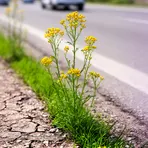
A common weed with small yellow flowers that grows along roadsides
Surface Forms
Morphology
This is a standard Linnaean binomial: the genus name 'Erigeron' plus the specific epithet 'canadensis' literally indicates an Erigeron species from Canada. Because the name is compositional and denotes taxonomy/origin rather than an idiomatic sense, a learner who knows both constituents can infer it refers to the Canadian species (horseweed), making it transparent.
Etymology
Erigeron canadensis comes from old Greek and Latin words: Erigeron may come from Greek words meaning 'early' and 'old man', because the plant makes white, fluffy seed heads that can look like an old man's beard, and canadensis means 'from Canada'. So the name points to the plant's look and North American origin, and helps explain why people call this common weed 'horseweed'.

