

horseweed
- noun
- /ˈhɔrsˌwid/
- US
- The farmer struggled to control the horseweed that was overtaking his field.
- horseweed (Conyza canadensis)
Examples
-
In the spring, the horseweed begins to bloom, adding a splash of yellow to the landscape.
-
For instance, in Tennessee, an estimated 0.8-2 million ha of soybean crops are infested with glyphosate-resistant horseweed (C. canadensis) (Heap 2011).
Academic text (2012) -
Many gardeners find that horseweed can quickly become a nuisance if not managed properly.
Synonyms

A tall weed from North America that lives for one year and has narrow leaves and small yellow flower heads

A common weed with narrow leaves and small yellow-green flowers that grows along roads and fields
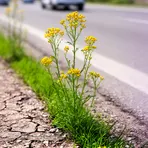
A common weed with small yellow flowers that grows along roadsides
Surface Forms
Morphology
Etymology
Horseweed is literally made from horse and weed, and was likely named because this tall plant often grows in fields and places where horses live. So the name is a simple memory: it is a common tall 'weed of horses' you might see along roadsides and pastures.

