

English runner bean
- noun
- UK
- English runner bean is delicious when lightly steamed and served with a little butter.
Examples
-
She prepared a salad with chopped tomatoes and fresh English runner beans.
-
The English runner bean is popular in British cuisine.
-
During the summer, my grandmother always grows English runner beans in her garden.
-
I love cooking with English runner beans.
-
The English runner bean is often enjoyed in stir-fries and adds a beautiful green color to the dish.
-
In her vegetable garden, she harvested fresh English runner beans to serve at dinner.
-
He made a nutritious soup using English runner beans, carrots, and onions.
Synonyms


 1
3.7
1
3.7
A climbing plant with long green pods and red flowers grown for food
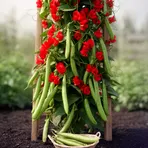
A climbing plant with red flowers and long edible pods
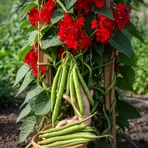
A climbing bean plant with red flowers and long edible pods

A climbing bean plant that people grow for its beans and pods
Surface Forms
Morphology
The meaning is directly compositional: 'English' specifies origin or variety and 'runner bean' names the type of bean, so the phrase denotes a variety of runner bean associated with England. This adjectival + noun composition is a common, predictable pattern across languages, so a B1 learner who knows the constituents can infer the meaning.
Etymology
English runner bean comes from the plant's way of growing: the parts runner and bean show that the plant sends out long stems that 'run' along the ground or climb and make long pods. 'English' marks the variety common in Britain, so the name means a long-podded bean usually eaten there.