
Dominion
 1
9.9
1
9.9

- noun
- /dəˈmɪnjən/
- Archaic
- Second, as an allegorical Bildungsroman, spanning the whole period of the British dominion over the Sudan, the novel traces the existential impact of colonialism on part of the Arab-African intelligentsia.
- British dominions
Loading YouTube…
Watch on YouTubeContinued appeals for Dominion contributions to Imperial defense also repeatedly fall on deaf ears.
- Continued appeals for Dominion contributions to Imperial defense also repeatedly fall on deaf ears.
Examples
-
Out of gratitude for Virginians' loyalty, King Charles II gave the colony the status of a dominion.
Academic text (1995) -
The terms offered virtual autonomy of the sort later to be termed "dominion status" to the colonies.
Academic text (1992) -
Once the League came into being, the dominions had little interest in it and much feared responsibility.
Academic text (1995) -
The question of representation was also used by some of the British dominions in their diplomatic debut to assert a sovereign international identity.
Academic text (1995) -
When, from 1927 on, non-permanent Council seats were informally allocated to various blocs, the dominions gained one, first held by Canada.
Academic text (1995) -
Britain vetoed both proposals, reacting in part to pressure from the dominions, especially Canada, which quailed at the prospect of being obligated to attack the United States.
Academic text (1995) -
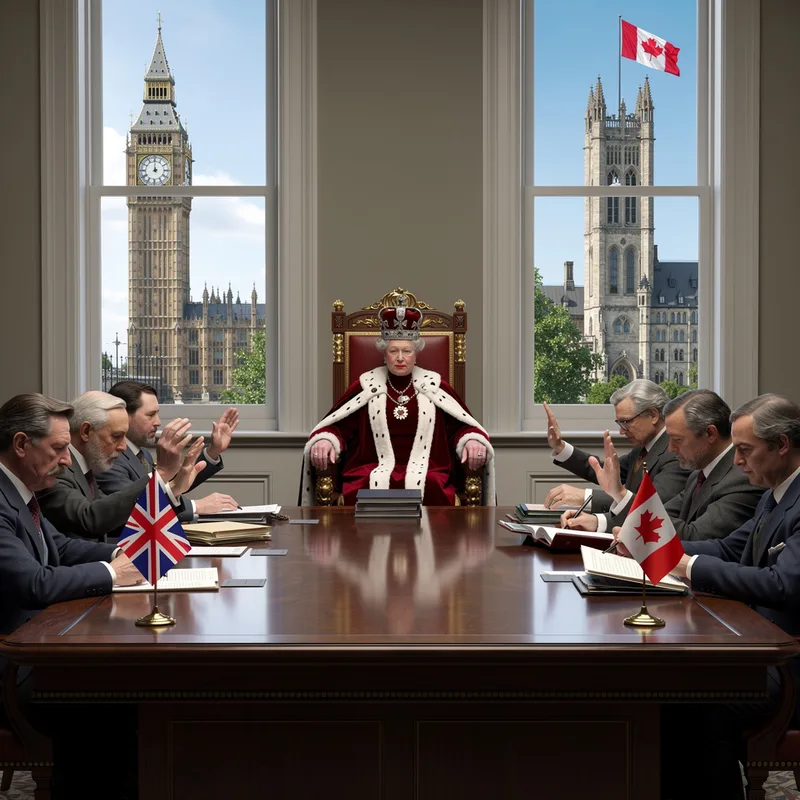
Canada was recognized as a dominion within the British Commonwealth, having more autonomy than a colony.
-
Australia gained dominion status, allowing it to govern itself while still part of the British Empire.
-
New Zealand was established as a dominion, marking its progress toward further independence from British rule.
Compounds




How Self-Governing

Surface Forms
Morphology
Dominion = domin + ion
The noun is formed with the suffix '-ion' but the root 'domin-' is not a standalone modern English word and the historical/political sense is not predictable from common English bases.
Etymology
Dominion comes from the Latin word dominus, which means 'lord' or 'master' and is the same root as domain and dominate. So a Dominion was originally a land under a 'lord' or 'master', which explains why it meant a nation with its own power to govern itself.