

Dominion Day
- noun
- Archaic
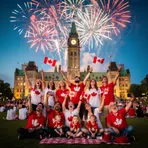
- Canadians celebrate Dominion Day on July 1st to honor the confederation of their country.
Examples
-
In 1867, Dominion Day marked the beginning of Canada's status as a self-governing dominion.
-
Many families gather for barbecues and fireworks on Dominion Day each year.
-
All I remember is one of the hammer throwers at Barkerville on Dominion Day said he was from Vanderhoof.
Blog text (21)
Synonyms
 3
1.0
3
1.0

A national holiday in Canada called Canada Day that celebrates Canada's founding in 1867
Surface Forms
Morphology
The meaning is directly compositional: 'Dominion' (a self-governing polity) combined with 'day' (a commemorative calendar day) yields a day commemorating the Dominion status/confederation. This follows the common 'X Day' naming pattern found across languages, so a B1 learner who knows both constituents can infer the meaning.
Etymology
Dominion Day comes from 1867, when several colonies joined to make the 'Dominion of Canada' and the new country used the word Dominion as its name. People called July 1 Dominion Day to mark the country's birthday, which is why the name meant the national holiday and was later changed to 'Canada Day' in 1982.