

territorial dominion
- noun
- /ˌtɛrɪˈtɔriəl dəˈmɪnjən/
- Formal
- The country expanded its territorial dominion by annexing neighboring lands.
Examples
-
Each colonial power maintained strict control over its territorial dominion in the region.
-
The king expanded his territorial dominion through conquest.
-
Disputes over territorial dominion have led to conflicts throughout history.
-
Many nations seek to protect their territorial dominion.
-
Disputes over territorial dominion have led to conflicts throughout history.
-
Each colonial power maintained strict control over its territorial dominion in the region.
-
The country expanded its territorial dominion by annexing neighboring lands.
Synonyms

 960
3.0
960
3.0

An area of land controlled by a country or ruler
 98
6.7
98
6.7
A land area controlled by a country outside its main borders
 41
5.6
41
5.6
An area controlled by a ruler, government, or organization
 4
8.0
4
8.0
A territory that governs itself and was part of the British Empire
 1
9.9
1
9.9
A territory ruled by a duke or duchess
 1
9.9
1
9.9
A region of land ruled by a person with a high royal title

A land area controlled by a ruler or state

A small area of land led by a local leader in ancient times
How Big

Surface Forms
Morphology
The meaning 'an area of land under the control of a ruler/government' is directly and compositionally derived from 'territorial' (pertaining to territory) and 'dominion' (authority to govern). This is a regular adjective+noun combination following standard semantics and cross-linguistic patterns, so a B1 learner who knows both constituents would readily infer the MWE meaning.
Etymology
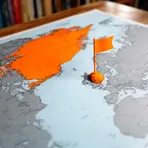
Territorial dominion brings to mind a ruler putting flags on a map to show land they control, with territorial meaning the land and dominion meaning rule or power. So, it means 'an area of land under control'.