
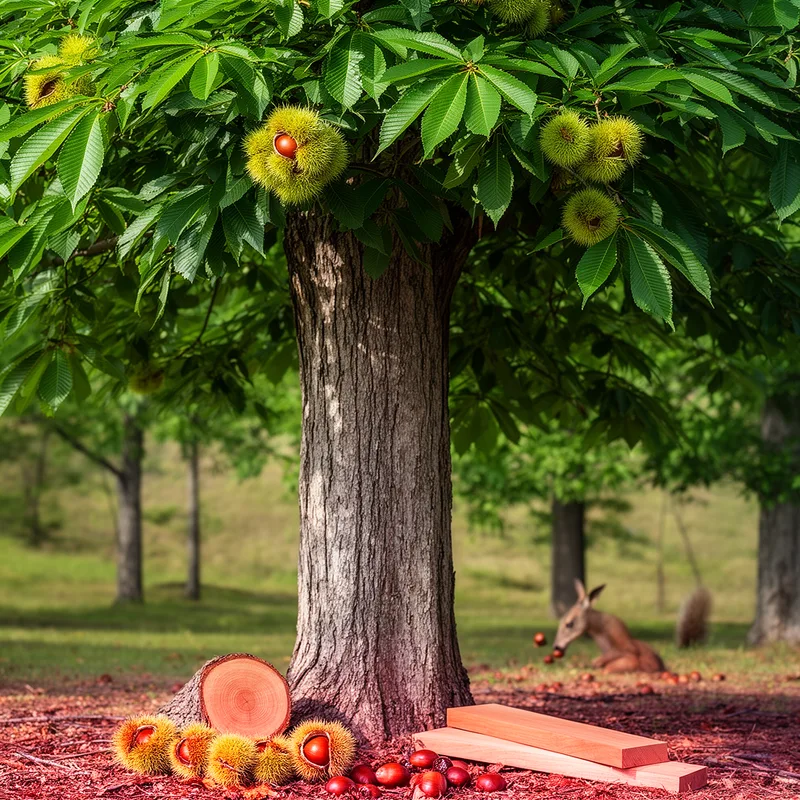
American sweet chestnut
- noun
- /əˈmɛrɪkən swit ˈʧɛstnət/
- US
- The American sweet chestnut once dominated forests in the eastern United States, providing shelter and food for wildlife.
Examples
-
Diseases such as chestnut blight devastated the American sweet chestnut population in the 20th century.
-
Many conservationists are working to restore the American sweet chestnut to its natural habitat.
-
The American sweet chestnut tree grows tall.
-
Have you seen an American sweet chestnut before?
-
The American sweet chestnut is prized for both its strong timber and delicious nuts.
-
In many parks across the east coast, the American sweet chestnut has become a focal point for educational programs about native trees.
-
After the introduction of a blight in the early 1900s, the American sweet chestnut population was drastically reduced.
Synonyms


 1
5.7
1
5.7
A large eastern North American tree that makes edible nuts and strong wood

A large tree that loses its leaves each year, native to eastern North America and known as the American chestnut
Surface Forms
Morphology
The phrase is compositionally built from 'American' (origin), 'sweet' (taste/quality) and 'chestnut' (a tree/nut), so its meaning — a chestnut species from America with sweet nuts — is directly inferable from the parts. This adjectival modification pattern is cross-linguistically common and not idiomatic, so a B1 learner who knows the constituents would readily understand it.
Etymology
American sweet chestnut is a simple name: American shows where the tree grows, sweet says the nuts taste good, and chestnut names the 'edible' nut and the tree. People long used its tasty nuts and strong wood, so the name now means the large native tree valued for its nuts and wood.