
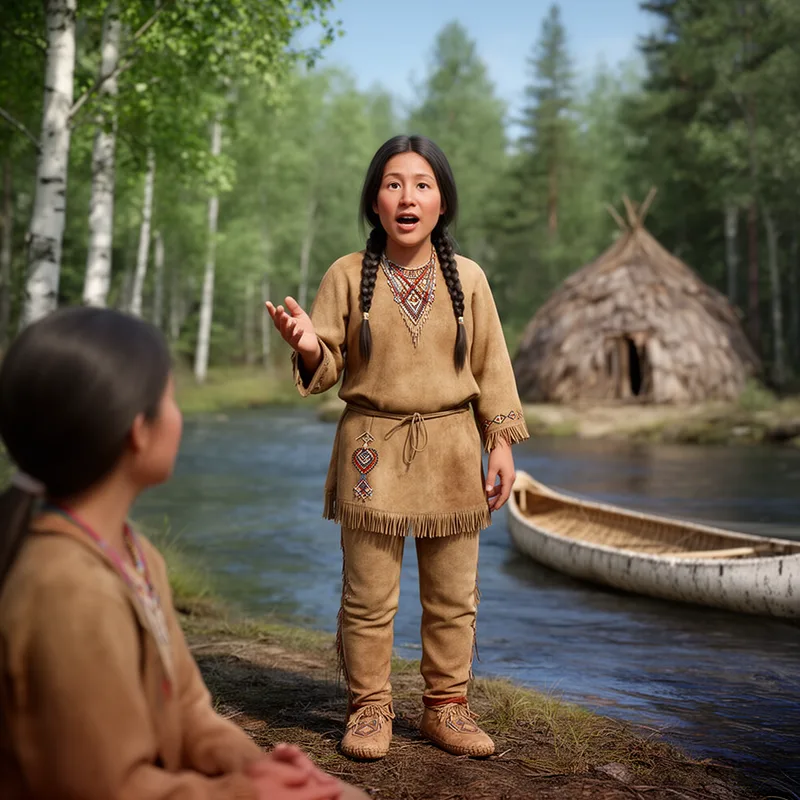
Algonquian
- noun
- /ælˈɡɒŋkwɪən/
- At the turn of the sixteenth century, the indigenous populations of northeastern North America were either Algonquian, Northern Iroquoian, or Siouan speakers (c.f. Trigger 1978).
Examples
-
Northern Iroquoians, Algonquians, and Siouans did not live in a natural world, but in a social world inhabited by human kinds of people, real men (man-beings), and by other-than-human kinds of people.
Academic text (1992) -
Affected first by the epidemics were the coastal Algonquians, who in New England suffered a major outbreak in 1616 of what was most likely smallpox (Snow and Lanphear 1988).
Academic text (1992) -
The life-worlds of many Algonquians, while deeply scarred and changed by political and religious invasion, still provided islands of continuity with tradition.
Academic text (1996) -
As was the case with the religion of the earliest missionized Algonquians—the Montagnais.
Academic text (1996) -
Many contemporary Native Americans identify as Algonquian due to their ancestral ties to the Algonquian-speaking groups.
-
The Algonquians were skilled at hunting, fishing, and gathering in their woodland environment.
-
Historically, the Algonquians inhabited regions that stretched across eastern Canada and the northeastern United States.
Synonyms
 161
3.4
161
3.4

A person whose family lived in North or South America before Europeans arrived


 1
7.3
1
7.3
A person whose family comes from the native peoples of North or South America
Compounds
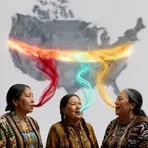
A group of Native languages of North America spoken from eastern Canada to the Great Plains
Surface Forms
Morphology
Etymology
Algonquian comes from the name Algonquin, which was borrowed from a Native American word and probably meant 'they are our neighbours' or 'those who speak differently'. So Algonquian names the Native peoples who once lived in eastern Canada and the northeastern United States.