
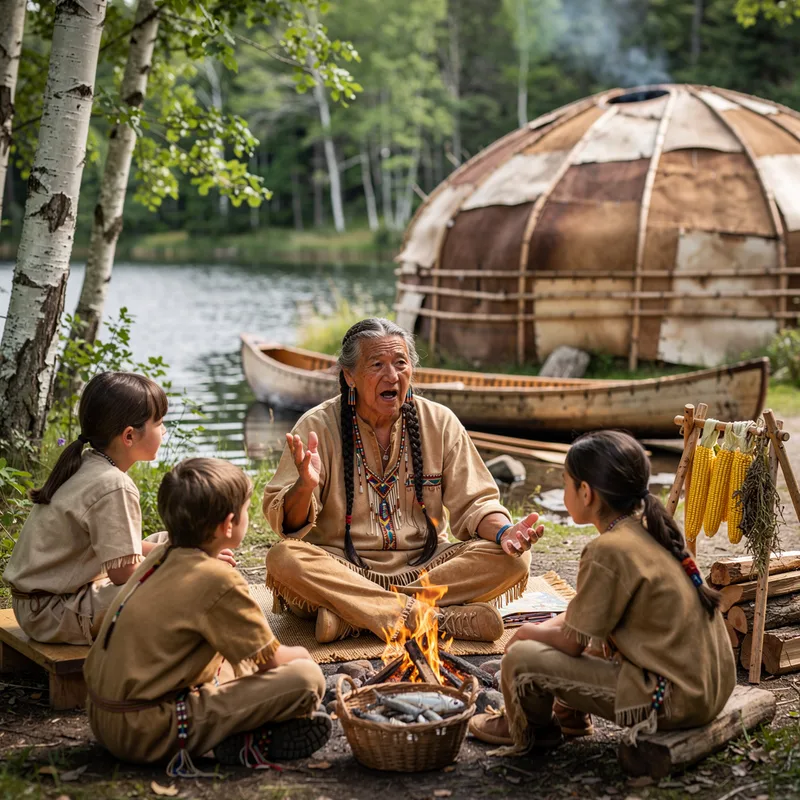
Algonquian
 1
9.1
1
9.1

- adjective
- /ælˈɡɒŋkwɪən/
- The bordering groups of the Algonquian language constituted a continuum of economic, linguistic, geographic, or symbolic-cultural nature.
- Algonquian language
- Algonquian Conference
- Algonquian Indians
Examples
-
As another example, in a theme about Native Americans of New York State, students read informational text about the Iroquois and Algonquian Indians and multiple examples of Iroquois and Algonquian folktales (see Table 6).
Academic text (2014) -
Common among Algonquian Indians, the vision quest inaugurated the spiritual life of all individuals.
Academic text (2001) -
Visual imagery as presented in Algonquian beadwork is discussed in another pair of papers.
Academic text (1990) -
The Micmac, in their contemporary spelling mi'kmaq, are the northeasternmost Algonquian speakers in North America.
Academic text (2002) -
Midewiwin is a sacred and secret Medicine Society or religion (also used to refer to ceremonies within this tradition) practiced by a variety of Algonquian tribes, including the Ojibwe, and involving degrees of knowledge and experience.
Academic text (2017) -
Rather, it is believed that Smith, if he did not make up the whole episode, misinterpreted an Algonquian ritual in which he was subjected to a mock "execution" and ceremoniously adopted into Powhatan's tribe as a fictive kinsman.
Academic text (2015) -
Tater, non-Native people referred to these local Native Americans as the Chippewa, Ottawa, and Potawatomi, which referred to the division of the Algonquian people into the Michigan Three Fires Confederacy.
Academic text (2016) -
Anima parallels the Iroquoian orenda, the Algonquian manitou, and the Siouan wakan, transcendental cosmic energy forces.
Academic text (2017) -
The Algonquian peoples have a rich tradition of storytelling that reflects their cultural heritage.
-
Many Algonquian languages, such as Cree and Ojibwe, are still spoken in North America today.
Synonyms

About the native groups and languages of eastern North America
Compounds
A group of Native languages of North America spoken from eastern Canada to the Great Plains
Surface Forms
Morphology
Etymology
Algonquian comes from the name Algonquin, from a Native word thought to mean 'those who are nearby' or 'those who speak another language'. So Algonquian as an adjective means 'relating to the Algonquian peoples, their languages, or their culture'.