
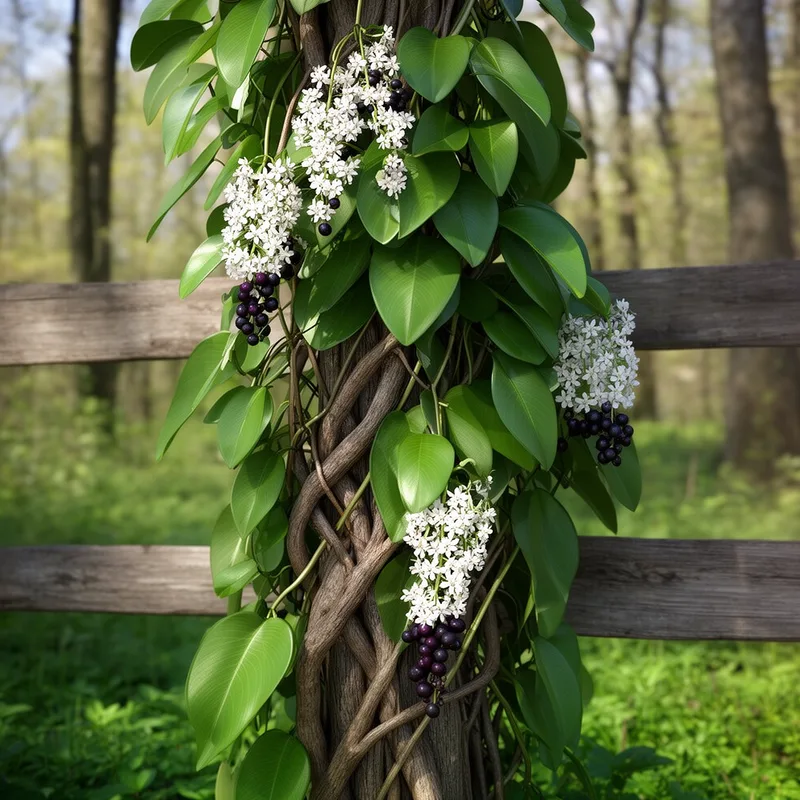
yellow parilla
- noun
- US
- In spring, the yellow parilla covers itself with clusters of small white flowers.
Examples
-
We found yellow parilla climbing along the fence at the forest's edge.
-
Many gardeners appreciate the yellow parilla for its unique fruits.
-
The herbalist recommended yellow parilla as part of the treatment for certain ailments.
-
The yellow parilla grows abundantly in the forests.
-
In spring, the yellow parilla covers itself with clusters of small white flowers.
-
We found yellow parilla climbing along the fence at the forest's edge.
-
Many gardeners appreciate the yellow parilla for its unique fruits.
Synonyms

A climbing vine from eastern North America with large leaves and grape-like poisonous berries

A woody vine with large oval leaves, small white flowers, and purple fruit that is poisonous

A woody climbing plant from eastern North America with large oval leaves and dark blue or purple berries
How Fruitful


Surface Forms
Morphology
yellow + parilla
The phrase is compositionally formed (adjective + noun), so if a learner knew 'parilla' they would understand it simply as a parilla that is yellow. However, 'parilla' is not a common or transparent English noun (no dictionary sense given) and the specific botanical meaning (woody vine with particular flowers and fruits) is lexical and cannot be inferred from the constituents, so the transparency is only partial.
Etymology
Yellow parilla may come from the simple image of the plant: yellow for pale or yellowish parts and parilla as an old name for a climbing plant. So the name helps you picture a woody 'vine' covered in small white flowers and dark berries, which is why it refers to that climbing plant today.