
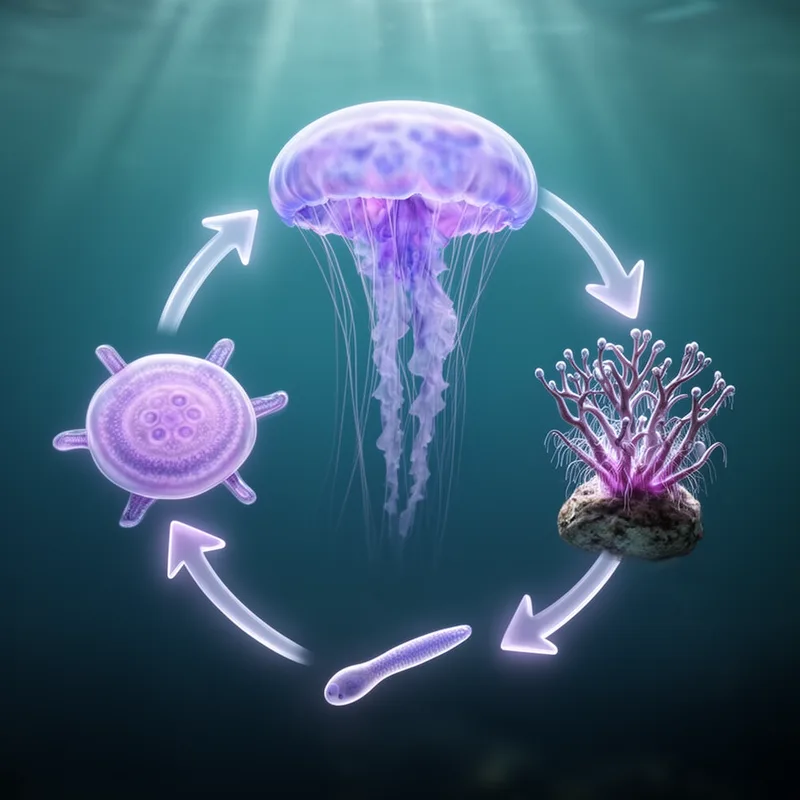
xenogenesis


 1
9.9
1
9.9
- noun
- /ˌzɛnəˈdʒɛnɪs/
- Specialized
Examples
-
Xenogenesis.
-
The phenomenon of xenogenesis is evident in certain insects, where different forms emerge during their life cycle.
-
The study of xenogenesis helps scientists understand how some plants and animals adapt over time.
-
In xenogenesis, the life cycle of an organism includes distinct phases that differ significantly from one another.
Synonyms

A life cycle with stages that reproduce sexually and stages that reproduce without sex

A life cycle in plants and some algae with two different forms, one sexual and one asexual

An organism with one generation that reproduces by sex and the next generation that reproduces without sex
A living thing that takes two or more different forms during its life
Surface Forms
Morphology
Etymology
The word xenogenesis comes from the Greek parts xeno- meaning 'strange' or 'foreign' and -genesis meaning 'birth' or 'origin', the same idea behind the common word generate. So xenogenesis literally means a 'strange birth' and is a good way to remember it describes plants or animals that change into very different forms during their life cycle.