
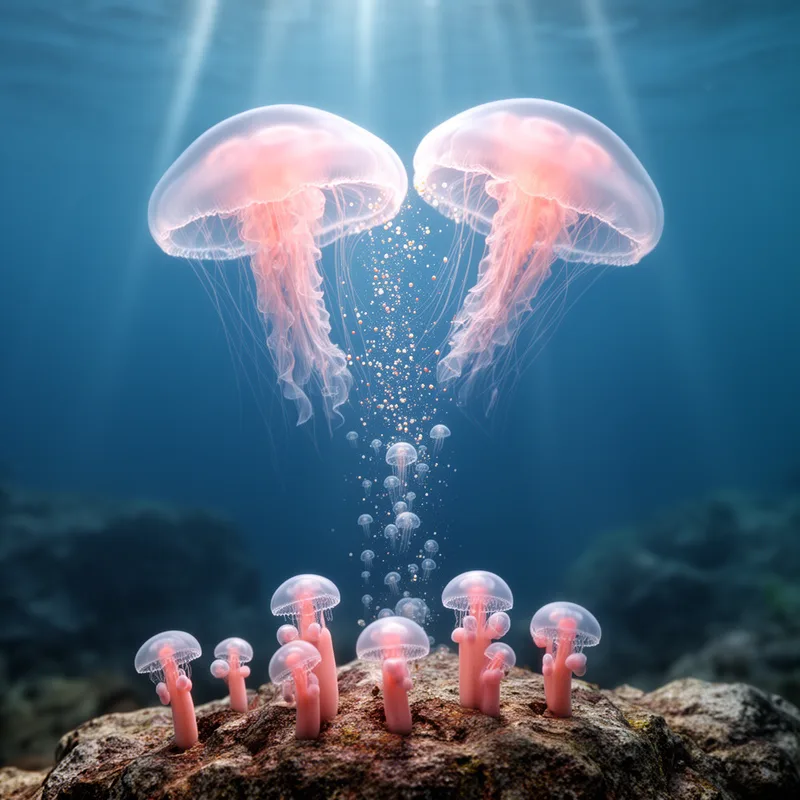
metagenesis
- noun
- /ˌmɛtəˈdʒɛnɪsɪs/
- Specialized
- Jellyfish are known for their metagenesis, switching between polyp and medusa forms.
Examples
-
Many parasitic worms undergo metagenesis to exploit different hosts in their life cycles.
-
Did you know that metagenesis occurs in some species of corals?
-
The study of metagenesis in plants has revealed important evolutionary adaptations.
-
The jellyfish exhibits metagenesis in its life cycle.
-
Jellyfish display metagenesis by alternating between their polyp and medusa stages.
-
Certain parasitic worms utilize metagenesis to adapt their reproduction strategy for different hosts.
-
Research has shown that metagenesis in corals allows them to thrive in varying environmental conditions.
Synonyms


 1
9.9
1
9.9
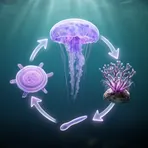
A life cycle in which a plant or animal changes between different forms
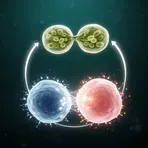
A life cycle with one generation that reproduces sexually and one that reproduces without sex

A life cycle in plants and some algae with two different forms, one sexual and one asexual

A life cycle with stages that reproduce sexually and stages that reproduce without sex
Surface Forms
Morphology
Etymology
The word metagenesis comes from Greek parts meta- meaning 'change' or 'after' and genesis meaning 'birth' or 'origin'. So think of it as a 'change of birth' — that is why it describes a life cycle where a plant or animal switches between different generations, like jellyfish moving from a polyp to a medusa form.