
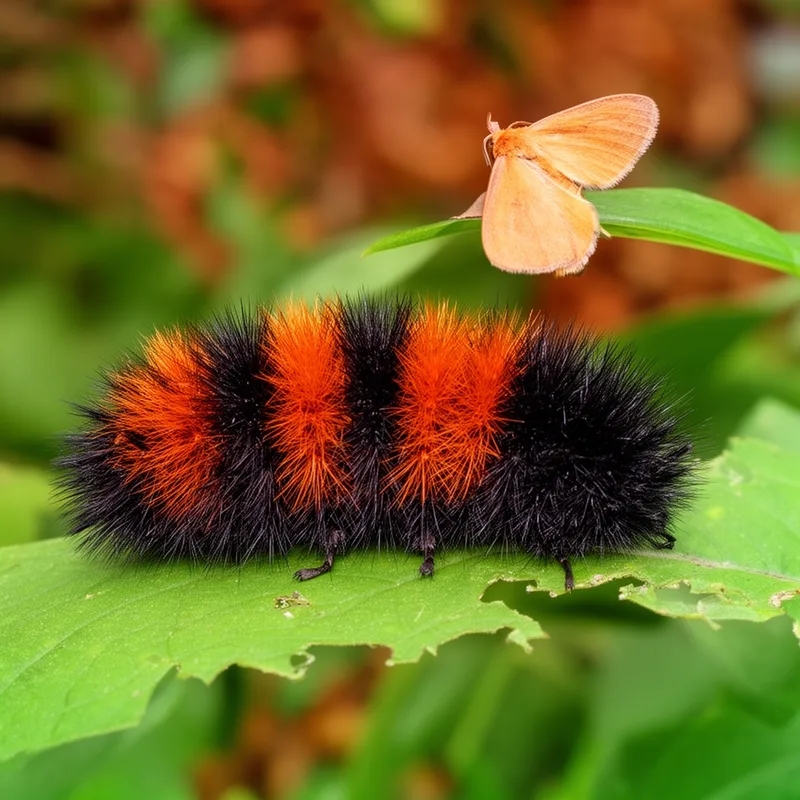
woolly bear caterpillar
- noun
- /ˈwʊli bɛr ˈkætərˌpɪlər/
- US
- During autumn, many gardeners notice woolly bear caterpillars crawling across their gardens, searching for food.
Examples
-
Some woolly bear caterpillars, for example, normally eat lupines.
Academic text (2000) -
At the eastern edge of Kalamazoo County, autumn woolly bear caterpillars hump across Queer Road to get to the fields and windbreaks of George Harland's rich river valley land.
Fiction book (2002) -
The woolly bear caterpillar feeds on plants like dandelions and clovers, which can sometimes damage crops.
-
Farmers are concerned when they see woolly bear caterpillars in their fields, as they can harm the plants.
Synonyms

 43
1.0
43
1.0

A soft young insect like a worm that becomes a butterfly or moth and eats leaves
 1
7.7
1
7.7
A furry caterpillar with black and brown bands that appears in gardens

A hairy caterpillar with a thick, fuzzy coat and dark bands
Antonyms

Surface Forms
Morphology
woolly + bear + caterpillar
The phrase is compositionally built from 'woolly' (hairy/fluffy) + 'bear' (used metaphorically to suggest appearance) + 'caterpillar' so a learner who knows these words can infer it refers to a hairy/bristly caterpillar. This follows a common English descriptive compound pattern (adjective+noun+noun) and the meaning is directly derivable from the constituents, making it easy for B1 learners to understand.
Etymology
Woolly bear caterpillar comes from the insect's thick, rough hairs that make the little caterpillar look like a tiny, woolly bear. So the name simply describes these hairy caterpillars, which later become moths, and helps people recognize the species, some of which may eat garden plants.