
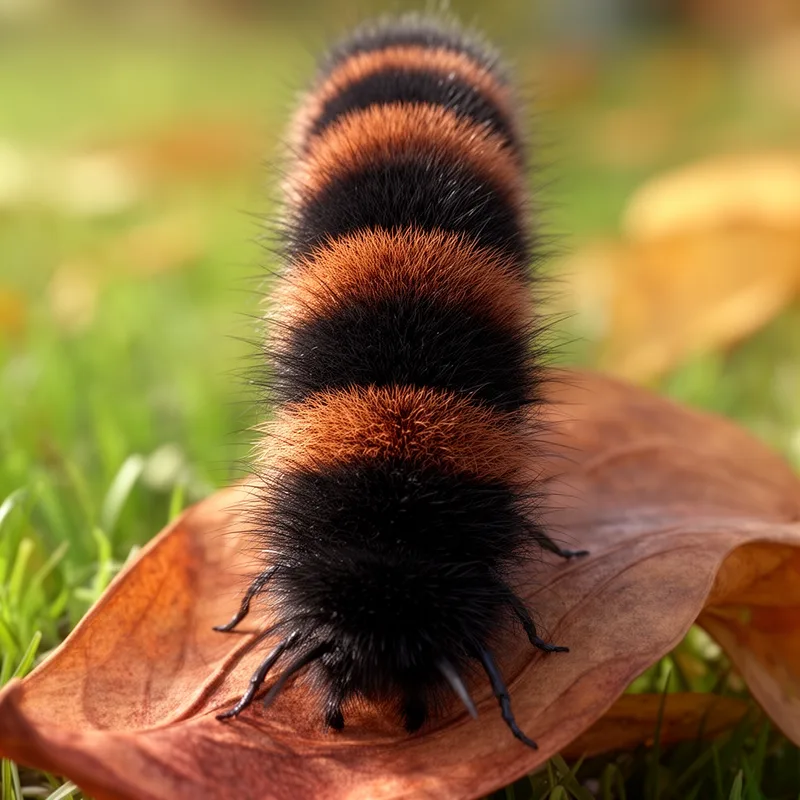
woolly bear moth
- noun
- /ˈwʊli bɛr mɔθ/
- US
- The woolly bear moth is known for its fuzzy, banded appearance.
Examples
-
Every fall, children search the garden for the distinctive woolly bear moth caterpillar.
-
Scientists study the woolly bear moth to understand how it survives harsh winter temperatures.
-
I saw a woolly bear moth crawling on the sidewalk.
-
The woolly bear moth is known for its fuzzy appearance.
-
Every fall, children search the garden for the distinctive woolly bear moth caterpillar.
-
Scientists study the woolly bear moth to understand how it survives harsh winter temperatures.
-
The woolly bear moth is known for its fuzzy, banded appearance.
Synonyms

 43
1.0
43
1.0

A soft young insect like a worm that becomes a butterfly or moth and eats leaves
 1
7.7
1
7.7
A furry caterpillar with black and brown bands that appears in gardens
A hairy caterpillar with thick, stiff hairs that turns into a small moth
Antonyms


Surface Forms
Morphology
Knowing 'woolly' and 'moth' lets a learner infer a fuzzy insect, but 'bear' here is not the animal sense but part of a conventional name ('woolly bear') for a fuzzy caterpillar, so the precise referent and zoological nuance are not fully predictable. The phrase is partly compositional (a woolly moth-like creature) yet relies on a lexicalized name, making comprehension likely approximate but not exact for a B1 learner.
Etymology
Woolly bear moth comes from the caterpillar's furry look: people saw its thick, bristly hairs and called it a woolly bear because it looked like a tiny furry animal. That's why the name now means the 'fuzzy' 'caterpillar' of a moth.